Fitness Items for Swinging: Kettlebells, Maces and More
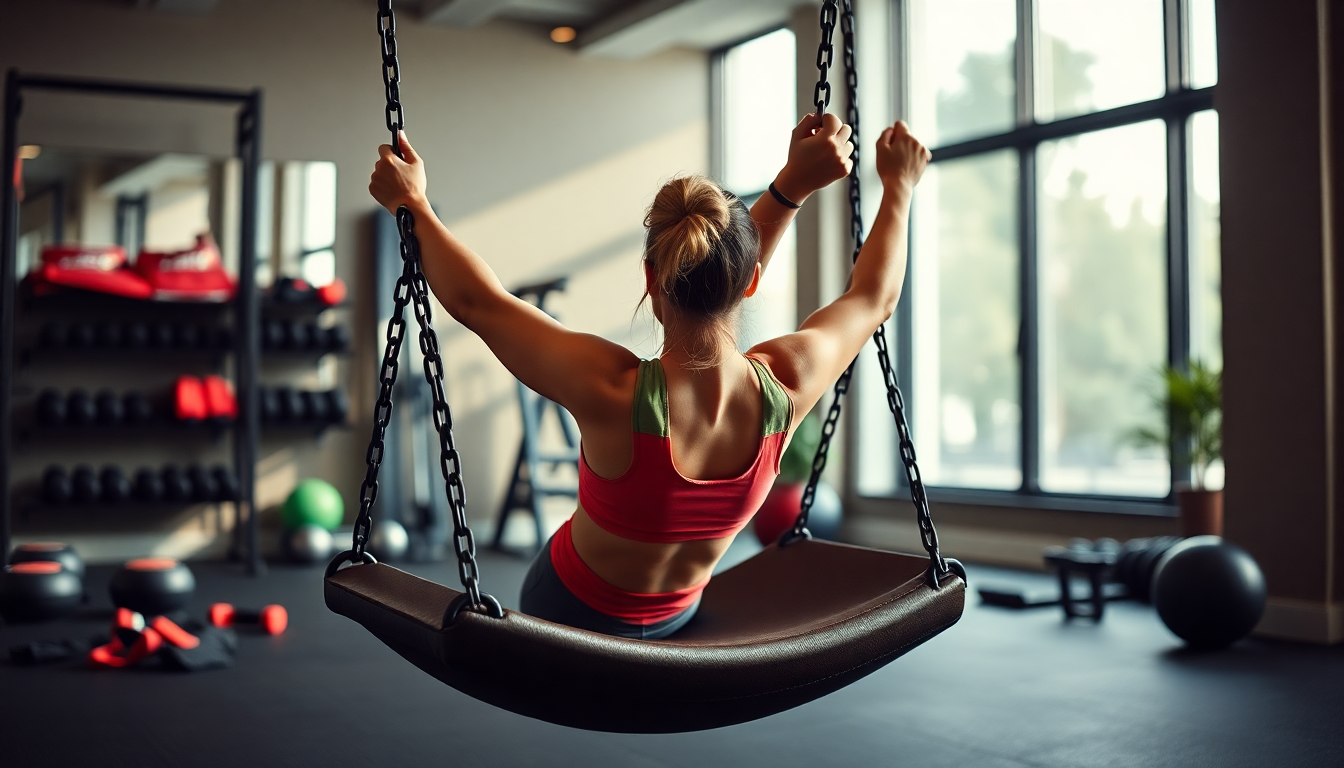
There is a reason the kettlebell swing has become one of the most prescribed exercises in modern strength training. Swinging movements recruit your entire posterior chain — hamstrings, glutes, lower back, lats, and core — in a single explosive motion that builds power, endurance, and grip strength simultaneously. No other category of exercise equipment replicates this demand as efficiently.
The term “fitness items for swinging” might sound like a crossword clue — and it actually is one — but the equipment behind it represents one of the oldest and most effective training methodologies in human history. Civilizations have swung weighted objects for thousands of years, from Persian warriors training with heavy clubs to Russian farmers lifting odd-shaped weights for sport. The modern fitness industry has repackaged these ancient tools with better manufacturing and smarter programming, but the fundamental physics remain the same: an object with a displaced center of mass forces your stabilizer muscles to work overtime, producing strength that transfers directly to real-world movement.
Kettlebells: The King of Swinging Tools
The kettlebell deserves its own section because no other swinging tool has achieved this level of mainstream adoption. Originating in Russia as a counterweight for measuring grain (the “girya”), kettlebells were formalized as training equipment in the Soviet sports system in the early 20th century and entered Western fitness culture in the early 2000s through Pavel Tsatsouline’s StrongFirst methodology.
The classic kettlebell swing is a hip-hinge movement where you drive the bell forward and upward using your hips, not your arms. The arms are merely connecting you to the weight — all the force originates from the glutes and hamstrings snapping your hips forward. This distinction matters because the most common swing mistake is lifting with the shoulders and arms, which turns a powerful posterior chain exercise into an awkward front raise.
Why Kettlebells Work Differently Than Dumbbells
A kettlebell’s center of mass sits several inches below the handle, creating a lever arm that constantly pulls your grip and wrist into extension. This displaced center of mass is the defining feature that makes swinging movements so effective. A dumbbell, with its symmetrical weight distribution, does not create the same rotational forces during a swing.
That offset load demands more from your forearm muscles, rotator cuff, and core stabilizers than a comparable dumbbell exercise. The result is grip strength, shoulder stability, and trunk rigidity that transfer to athletic performance, manual labor capacity, and injury resilience in ways that machine-based training simply cannot replicate.
Kettlebell Swing Variations
Two-hand swing: The foundational movement. Both hands grip one kettlebell. Best for beginners learning the hip hinge pattern and for heavy loading in experienced lifters.
One-hand swing: Unilateral loading forces the core to resist rotation, adding an anti-rotation component that the two-hand swing does not provide. This variation also allows longer sets because each arm alternates and rests.
American swing: The bell travels overhead rather than stopping at chest height. Popularized by CrossFit, this variation increases range of motion and shoulder mobility demands but has been criticized for encouraging excessive shoulder flexion under load.
Russian swing: The bell stops at approximately eye or chest height. This is the original variation and the one most strength coaches recommend because it maintains safe shoulder positioning while still providing the full hip-drive benefit.
Steel Maces and Indian Clubs
These are the oldest swinging tools in human history, and their resurgence in modern fitness is long overdue. Indian clubs — lightweight, shaped like bowling pins — were a staple of Victorian-era physical culture and military training. Steel maces are their heavier, modern counterpart, typically ranging from 7 to 30 pounds with a long handle and a weighted ball at one end.
The physics of mace and club training are fundamentally different from kettlebells. Where a kettlebell swing operates primarily in the sagittal plane (front-to-back), mace and club exercises move through rotational and multi-planar patterns. A 360 mace swing — where the ball sweeps in a full circle around your head — places enormous demand on your grip, shoulders, upper back, and rotational core strength.
Why Rotational Strength Matters
Most athletic movements — throwing, punching, swinging a bat or racquet, changing direction on a field — generate power through the transverse plane. Traditional gym exercises (squats, deadlifts, bench press) operate almost exclusively in the sagittal plane. Mace and club training fills this gap by building rotational power, shoulder resilience, and coordination that directly enhances athletic performance.
The light weight of Indian clubs (typically 1–5 pounds each) makes them excellent for rehabilitation, warm-ups, and high-repetition shoulder conditioning. Physical therapists use them to restore range of motion after shoulder injuries. Martial artists use them to build shoulder endurance and grip stamina for grappling.
Steel maces, being heavier, build more raw strength and are better suited for intermediate to advanced trainees. The offset weight distribution — all the load at the far end of a long handle — creates leverage forces that crush your grip and challenge your shoulder stabilizers in ways that no dumbbell or barbell exercise replicates.
Battle Ropes
Battle ropes occupy a unique space in the swinging equipment landscape because the “swing” is continuous and wave-like rather than ballistic and pendulum-based. You anchor a heavy rope (typically 1.5–2 inches in diameter and 30–50 feet long) to a fixed point and create alternating waves, slams, or spirals by moving your arms up and down or side to side.
The metabolic demand is extraordinary. Thirty seconds of vigorous battle rope waves can elevate heart rate to 90% of maximum — comparable to sprinting — while simultaneously building shoulder endurance, grip strength, and core stability. This combination of cardiovascular conditioning and upper-body muscular demand is rare in fitness equipment and explains why battle ropes have become a staple in athletic training facilities, MMA gyms, and functional fitness programs.
Common Battle Rope Movements
Alternating waves: The foundational movement. Each arm creates independent waves in the rope. The longer and faster you move, the larger the waves and the greater the resistance.
Slams: Both arms raise the rope overhead and slam it to the ground. This adds a vertical power component and a mild eccentric demand on the descent.
Spirals: Both arms move in the same direction simultaneously, creating a corkscrew pattern in the rope. This challenges rotational stability and coordination differently than alternating waves.
Circles: Both arms make small, rapid circles outward or inward. This builds shoulder endurance and is deceptively exhausting at high speeds.
The main limitation of battle ropes is space. You need 30–50 feet of clear floor space and a secure anchor point, which makes them impractical for most home gyms. Commercial gyms and training facilities are their natural habitat.
Bulgarian Bags
The Bulgarian bag was developed by Bulgarian wrestling coach Ivan Ivanov to train Olympic wrestlers. It is a crescent-shaped sandbag with handles at multiple points, designed specifically for swinging, spinning, and rotational movements that mimic the demands of grappling combat.
Bulgarian bag exercises like the spin, the suplex throw simulation, and the bag swing develop rotational power, grip endurance, and full-body coordination under load. The soft, uneven weight distribution challenges stabilizer muscles in ways that rigid equipment does not — the sand shifts inside the bag during movement, creating unpredictable load patterns that your body must constantly adjust to.
The weight range (typically 5–37 pounds) seems modest compared to barbell training, but the instability and momentum of swinging movements make these weights far more challenging than the numbers suggest. A 26-pound Bulgarian bag swing for high reps will humble experienced lifters.
The Unique Benefits of Swinging Exercises
All of these tools share common physiological demands that set swinging exercises apart from traditional strength training.
Posterior chain dominance: Swinging movements are hip-driven. They strengthen the muscles on the back of your body — glutes, hamstrings, erectors, lats — that are chronically weak in desk-bound populations. This posterior chain strength is the foundation of athletic power and the primary defense against lower back injury.
Grip strength development: Every swinging tool demands intense grip work because the offset load and momentum constantly try to tear the implement from your hands. Grip strength is one of the strongest predictors of overall health and longevity in epidemiological research, and swinging exercises develop it functionally — through dynamic, high-velocity contractions rather than static holds.
Cardiovascular conditioning: Swinging exercises, particularly kettlebell swings and battle ropes, elevate heart rate dramatically while building strength. This simultaneous strength and conditioning effect is called “metabolic resistance training” and it is more time-efficient than performing separate strength and cardio sessions.
Rotational and anti-rotation power: Maces, clubs, and Bulgarian bags build the ability to generate and resist rotational forces — a quality that traditional linear exercises miss entirely and that transfers directly to sports performance and injury prevention.
Coordination and proprioception: Swinging a weighted object through space requires timing, spatial awareness, and multi-joint coordination. These neuromuscular demands improve motor control and body awareness in ways that machine-guided movements cannot.
Building a Swinging-Based Training Program
You do not need every tool listed above. Most people benefit enormously from starting with a single kettlebell and mastering the basic swing pattern before expanding to other implements.
A minimal effective swinging program might look like this:
Day 1: Kettlebell swings — 10 sets of 15 reps with 30–60 seconds rest. Superset with goblet squats.
Day 2: Steel mace 360s and shield casts — 5 sets of 10 each direction. Follow with battle rope alternating waves — 8 rounds of 30 seconds work, 30 seconds rest.
Day 3: One-hand kettlebell swings — 8 sets of 10 per arm. Bulgarian bag spins and throws — 4 sets of 12. Finish with Indian club circles — 3 sets of 30 seconds per direction.
This three-day rotation covers all planes of movement, develops both strength and conditioning, and can be completed in 30–45 minutes per session. The key is progressive overload — increase weight, increase reps, decrease rest periods, or add complexity over time.
Frequently Asked Questions
What is the answer to the crossword clue “fitness items for swinging”?
The most common crossword answer is kettlebells — 11 letters, the fitness items most famously associated with swinging exercises. Depending on the crossword grid and letter count, other possible answers include bells (5 letters) or clubs (5 letters) referring to Indian clubs.
Are kettlebell swings better than deadlifts?
Neither is better — they serve different purposes. Kettlebell swings build explosive hip power, cardiovascular endurance, and grip strength through high-velocity repetitions. Deadlifts build maximal strength through heavy loading and controlled tempo. Most well-rounded programs include both. If forced to choose one, kettlebell swings offer more total-body fitness benefit per minute of training time.
Can swinging exercises replace traditional cardio?
Yes. Multiple studies have shown that kettlebell swing protocols produce cardiovascular adaptations comparable to running or cycling at moderate intensity. Battle rope training elevates heart rate even more aggressively. For people who dislike traditional cardio, swinging exercises offer a strength-building alternative that trains the heart and lungs simultaneously.
What weight kettlebell should a beginner start with?
Most men start with a 16 kg (35 lb) kettlebell for swings. Most women start with an 8 kg (18 lb) or 12 kg (26 lb) bell. These are starting points — the correct weight allows you to complete sets of 10–15 swings with proper hip-hinge form without your arms pulling the bell or your back rounding. When 15 reps feel easy with good form, move up in weight.
Are swinging exercises safe for people with back pain?
When performed with proper form, kettlebell swings are one of the most effective exercises for rehabilitating and preventing lower back pain. They strengthen the posterior chain muscles that support the spine. However, poor form — rounding the lower back, lifting with the arms, or overarching at the top — can worsen back issues. Learn the hip hinge pattern first, ideally with a qualified coach, before adding load.
How often should you train with swinging implements?
Two to four sessions per week is optimal for most people. Swinging exercises are demanding on the grip, posterior chain, and cardiovascular system, and require adequate recovery. Daily swinging is possible with light loads (Indian clubs, light maces) but heavy kettlebell and mace work needs at least one rest day between sessions.
Conclusion
Fitness items for swinging — kettlebells, steel maces, Indian clubs, battle ropes, and Bulgarian bags — represent a training modality that builds strength, power, endurance, and coordination through a single movement pattern. They are not trendy gadgets. They are tools with centuries of proven use that have been validated by modern sports science research.
The kettlebell is the logical starting point for most people. Master the swing, build your hip hinge pattern, develop your grip, and then explore maces, clubs, and ropes as your strength and coordination progress. The investment is minimal — a single kettlebell costs less than a month of gym membership — and the training space required is smaller than a yoga mat.
What makes swinging exercises irreplaceable is the combination of qualities they develop simultaneously. You build explosive power and cardiovascular endurance. You strengthen your grip and your core. You train your posterior chain and your coordination. No other category of exercise delivers this many adaptations in a single training session. The ancient warriors who swung heavy clubs and farmers who lifted odd-shaped weights understood this intuitively. Modern training science has simply confirmed what thousands of years of practice already proved.