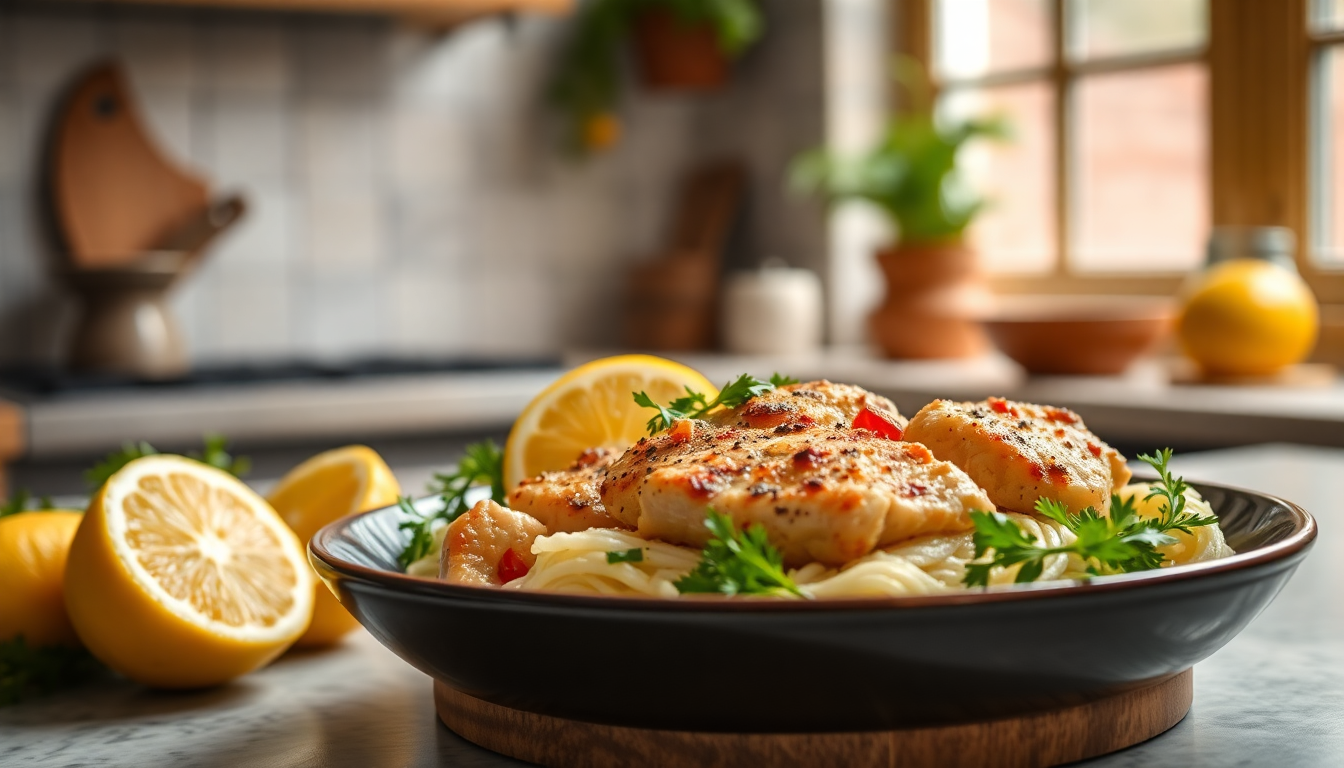
Greek Lemon Chicken
The One-Pan Mediterranean Classic That Never Fails
Few dishes capture the essence of Greek home cooking like lemon chicken roasted with potatoes. The combination of crispy golden skin, juicy meat infused with citrus and herbs, and potatoes that have absorbed every drop of pan sauce creates a meal that has sustained Greek families for generations.
This Greek lemon chicken recipe goes beyond the basics. You will learn the ladolemono technique that professional Greek cooks rely on, the science behind keeping chicken breast perfectly juicy, and the exact timing that separates a good roast from an extraordinary one.
While chicken souvlaki delivers bold grilled flavors on skewers, this preparation offers a completely different experience: slow-roasted, deeply infused, and built around a pan sauce that becomes part of the meal. Both belong in your rotation of Greek chicken recipes, but they serve different occasions.
What Makes Greek Lemon Chicken Different
Lemon chicken exists in many cuisines. Chinese-American cooking coats fried chicken in sweet lemon sauce. Italian piccata pairs thin cutlets with a butter-caper-lemon pan sauce. Greek lemon chicken takes a fundamentally different approach.
The Ladolemono Foundation
The soul of this dish is ladolemono (λαδολέμονο), a cold emulsion of extra virgin olive oil and fresh lemon juice, seasoned with garlic and oregano. Unlike cooked sauces, ladolemono preserves the bright acidity of raw lemon while the olive oil carries fat-soluble flavors deep into the meat.
During roasting, the ladolemono breaks down and mingles with rendered chicken fat and starchy potato juices to create a pan sauce that requires no additional thickening. This is why Greek cooks insist on roasting chicken directly above the potatoes: everything builds flavor together.
Why Chicken Breast Works Here
Many chicken breast Greek recipes fail because cooks treat breast meat the same as thighs. Breast meat has less intramuscular fat, which means it dries out faster. However, three techniques in this recipe counteract that tendency:
- Acid-marinating: The lemon juice in ladolemono gently denatures the surface proteins, allowing the marinade to penetrate and the meat to retain moisture during cooking.
- Bone-in, skin-on: The bone conducts heat gently and the skin protects the surface from direct oven heat. Removing the skin before cooking is the fastest path to dry chicken breast.
- Temperature control: Pulling the chicken at 160°F instead of 165°F allows carryover cooking to finish the job without overcooking the fibers.
If you prefer boneless cuts, pound the chicken breast to even thickness before marinating. This prevents the thin end from drying out while the thick end finishes cooking.
The Complete Recipe
Ingredients
For the Chicken:
- 3 pounds bone-in, skin-on chicken pieces (thighs, drumsticks, and breasts combined)
- 1 teaspoon salt
- 1/2 teaspoon black pepper
- 1 lemon, thinly sliced for roasting
For the Ladolemono Marinade:
- 1/3 cup fresh lemon juice (about 2 large lemons)
- 1/4 cup extra virgin olive oil
- 6 cloves garlic, minced
- 2 tablespoons dried Greek oregano
- 1 teaspoon dried thyme
- 1/2 teaspoon sweet paprika (optional, for color)
For the Potatoes:
- 1.5 pounds Yukon Gold potatoes, cut into wedges
- 1/2 cup chicken broth
- 2 tablespoons olive oil
- 1 tablespoon lemon juice
- 1 teaspoon dried oregano
For Garnish:
- Fresh parsley, chopped
- Lemon wedges for serving
- Crumbled feta cheese (optional)
Step-by-Step Method
Step 1: Prepare the Ladolemono
Whisk the lemon juice and olive oil together until emulsified. Add the minced garlic, oregano, thyme, and paprika. The mixture should look slightly creamy and unified, not separated.
Step 2: Marinate the Chicken
Pat the chicken pieces thoroughly dry with paper towels. Season with salt and pepper. Place in a large bowl and pour two-thirds of the ladolemono over the chicken, turning to coat every surface. Cover and refrigerate for at least 30 minutes, up to 4 hours. Reserve the remaining ladolemono for the potatoes.
Step 3: Prepare the Potato Base
Preheat oven to 425°F. Toss the potato wedges with the reserved ladolemono, chicken broth, olive oil, and additional oregano. Spread evenly in a large roasting pan or cast-iron skillet. The potatoes should form a single layer.
Step 4: Roast
Remove chicken from refrigerator 15 minutes before cooking. Arrange the chicken pieces skin-side up directly on top of the potatoes. Tuck lemon slices between and around the chicken. The skin should not touch the liquid below.
Roast for 45-50 minutes, until the chicken skin is deeply golden and an instant-read thermometer inserted into the thickest part reads 160°F. The potatoes should be tender and the pan juices should be reduced and flavorful.
Step 5: Rest and Serve
Transfer chicken to a serving platter and tent loosely with foil. Rest for 10 minutes. During this time, the internal temperature will rise to 165°F and the juices will redistribute throughout the meat.
Spoon the pan juices and some potatoes around the chicken. Garnish with fresh parsley, lemon wedges, and crumbled feta if desired.
Alternative Cooking Methods
Sheet Pan Method
For easier cleanup, use a large sheet pan lined with parchment. Spread potatoes in a single layer and place chicken on top. The results are nearly identical, though the pan sauce may be slightly thinner due to more surface area.
Skillet Method (Stovetop Start)
Begin by searing the marinated chicken skin-side down in a cast-iron skillet over medium-high heat for 5-6 minutes until the skin crisps. Flip, add the potatoes and liquid around the chicken, then transfer the entire skillet to a 400°F oven for 30-35 minutes. This method produces the crispiest skin.
Slow Cooker Adaptation
While not traditional, the slow cooker works for busy weeknights. Place potatoes in the bottom of the slow cooker, add the ladolemono and broth, then arrange chicken on top. Cook on low for 6-7 hours or high for 3-4 hours. The chicken will be tender but will lack the crispy skin. For crispiness, broil the chicken pieces for 3-4 minutes after removing from the slow cooker.
Choosing the Right Chicken Cut
Bone-In, Skin-On Thighs
The most forgiving cut for this recipe. Thighs have more intramuscular fat, which keeps them juicy even if slightly overcooked. They also develop better browning due to the higher fat content rendering during roasting.
Chicken Breast (Bone-In, Skin-On)
The preferred cut for those seeking leaner results. Bone-in, skin-on breast meat stays significantly juicier than boneless alternatives. Position the breasts in the center of the pan where heat is most consistent, and monitor the internal temperature carefully.
Chicken Breast (Boneless, Skinless)
Acceptable but requires modifications. Pound to even thickness, reduce marinating time to 30 minutes maximum (the acid will make the surface mushy otherwise), and reduce cooking time to 20-25 minutes at 425°F. Check temperature at 18 minutes.
Whole Cut-Up Chicken
The traditional Greek approach. A whole chicken cut into 8 pieces provides a mix of dark and white meat, satisfying everyone at the table. Separate the pieces by a few inches in the pan to ensure even cooking.
Common Mistakes and How to Avoid Them
Soggy Chicken Skin
The number one complaint. If the chicken sits in the liquid during roasting, the skin steams instead of crisps. Always place chicken skin-side up above the liquid level. If using a deep pan, elevate the chicken on a rack above the potatoes.
Dry Chicken Breast
Usually caused by overcooking. Use an instant-read thermometer and remove chicken at 160°F, not 165°F. The carryover heat during resting will bring it to the safe temperature. Cutting into the chicken to check doneness releases the juices you worked to retain.
Bitter Marinade
Using bottled lemon juice or excessive lemon zest can create bitterness. Fresh-squeezed juice only. The zest is optional and should be used sparingly if at all, as the pith beneath contains compounds that turn bitter when heated.
Mushy Potatoes
Usually caused by cutting potato pieces too small or overcrowding the pan. Cut wedges at least 1 inch thick and arrange in a single layer. Yukon Gold potatoes hold their shape better than russets in this preparation.
Burnt Garlic
Minced garlic burns quickly at 425°F. By incorporating the garlic into the ladolemono emulsion rather than applying it directly to the chicken surface, the oil insulates the garlic from direct heat. Do not add extra garlic to the top of the chicken before roasting.
Meal Prep and Storage
This recipe works exceptionally well for meal prep. The flavors actually improve overnight as the lemon and garlic continue to penetrate the meat.
Make-Ahead Strategy
Marinate the chicken up to 24 hours in advance. Prepare the potatoes and ladolemono the morning of cooking. When ready to eat, assemble and roast. Total hands-on time at dinner is under 10 minutes.
Storing Leftovers
Refrigerate leftover chicken and potatoes separately in airtight containers for up to 4 days. Store the pan juices in a small container; they will gelatinize when cold, which is normal.
Reheating
Reheat in a 350°F oven for 15-20 minutes, covered with foil to prevent drying. Add a splash of chicken broth to the potatoes before reheating. Avoid the microwave, which makes the skin rubbery and the meat tough.
Freezing
Cooked chicken freezes well for up to 3 months. Freeze without the potatoes for best texture. Thaw overnight in the refrigerator before reheating.
What to Serve with Greek Lemon Chicken
The potatoes in this recipe serve as a built-in side dish, but these accompaniments complete the meal:
- Horiatiki salad - The classic Greek village salad provides a fresh, crunchy contrast to the rich roasted chicken
- Tzatziki - Cool yogurt-cucumber sauce that balances the lemon acidity
- Warm pita bread - For soaking up the pan juices
- Steamed green beans with lemon - A light vegetable side that echoes the citrus theme
- Rice pilaf - Absorbs the pan sauce beautifully
For a complete Greek spread, consider adding chicken souvlaki as an appetizer or pairing with dishes from our Greek recipes collection.
Frequently Asked Questions
Can I use chicken breast instead of thighs?
Yes. Bone-in, skin-on breast works best. If using boneless breast, pound to even thickness and reduce cooking time to 20-25 minutes. Monitor the internal temperature carefully to avoid drying out.
How long should I marinate the chicken?
Thirty minutes provides noticeable flavor improvement. Two to four hours is optimal. Beyond four hours, the lemon acid begins to break down the surface proteins too much, creating a mushy texture. This is especially true for chicken breast.
Can I make this without potatoes?
Absolutely. Roast the chicken alone on a sheet pan and serve with rice or crusty bread to soak up the pan juices. The cooking time remains the same.
What is ladolemono?
Ladolemono is a cold Greek sauce made by emulsifying extra virgin olive oil with fresh lemon juice, garlic, and herbs. It serves as both marinade and finishing sauce in Greek cooking. Unlike vinaigrettes, ladolemono has a creamy consistency achieved through vigorous whisking.
Is this the same as Greek chicken souvlaki?
No. Souvlaki consists of marinated chicken pieces grilled on skewers, typically served in pita bread with tzatziki. Greek lemon chicken is a whole-piece roast with potatoes. Both use similar flavor profiles but differ in technique, presentation, and serving style. See our chicken souvlaki recipe for the skewered version.
Can I make this recipe in a slow cooker?
Yes. Place potatoes on the bottom, pour ladolemono and broth over them, then arrange chicken on top. Cook on low for 6-7 hours or high for 3-4 hours. For crispy skin, broil the chicken for 3-4 minutes after cooking.
Conclusion
Greek lemon chicken represents the best of Mediterranean home cooking: simple ingredients, honest technique, and results that exceed the effort invested. The ladolemono marinade penetrates deep into the meat while the potatoes absorb the concentrated pan juices, creating a complete meal from a single pan.
Whether you are exploring chicken breast Greek recipes for the first time or adding a reliable weeknight dinner to your rotation, this recipe delivers consistent, flavorful results. The techniques you learn here—proper marinating, temperature control, and resting—apply across all Greek chicken preparations and will improve your cooking beyond this single dish.
For more Mediterranean chicken ideas, explore our complete collection of Greek chicken recipes or visit the main Greek recipes hub for dozens of authentic dishes.