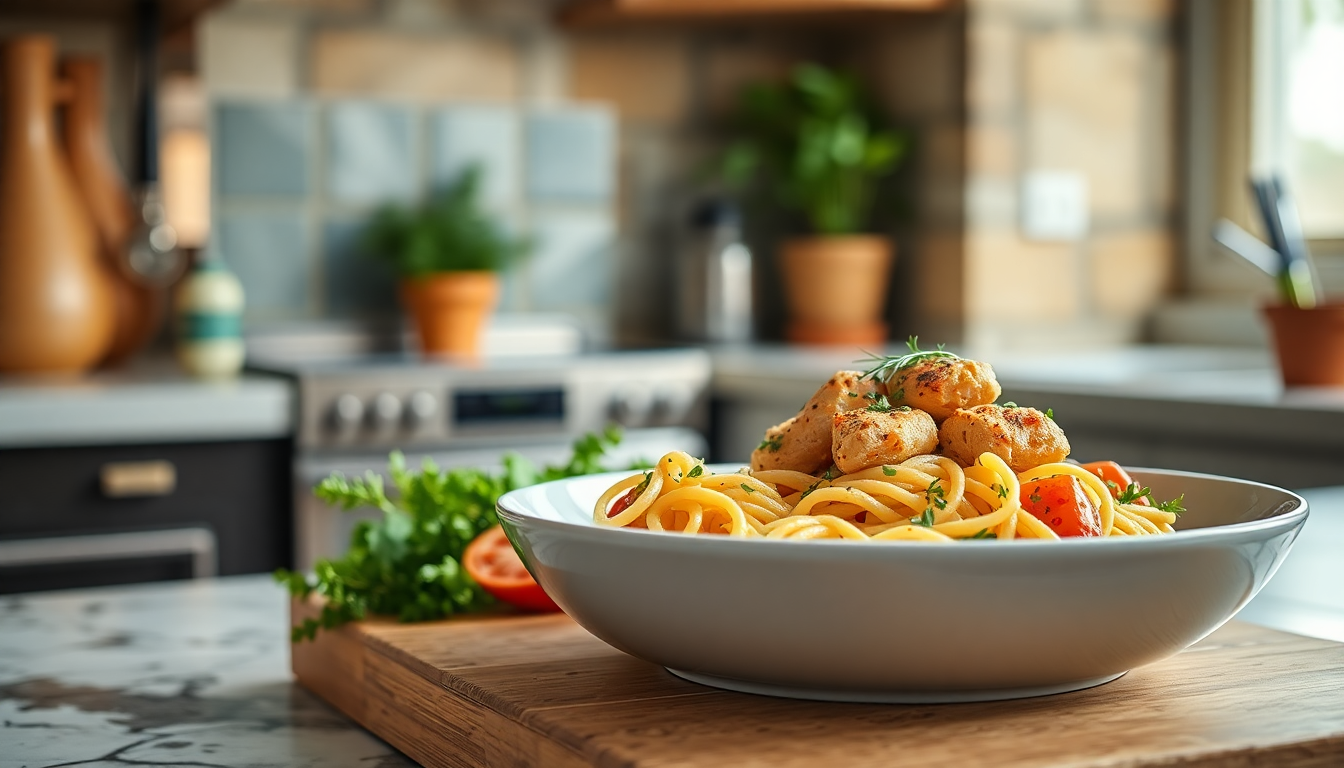
Greek Chicken Pasta
Lemon, Herbs, Feta, and 30 Minutes to the Table
Greek chicken pasta sits at the intersection of two comfort food traditions: the bold, sun-drenched flavors of Greece and the satisfying simplicity of a pasta dinner. The combination of lemon, oregano, garlic, and olive oil with tender chicken and briny toppings like feta, olives, and artichoke hearts creates a dish that is brighter and more complex than a standard chicken pasta, yet just as fast to prepare.
Most recipes for this dish treat it as a basic toss-and-serve. This page goes further. You will learn why certain pasta shapes work better than others for capturing Greek-style sauces, which cheese delivers the best result for each version, and how to build a creamy variation that does not rely on heavy cream. If you are working through a set of Greek chicken recipes, this one fills the weeknight-fast niche that souvlaki and roast lemon chicken do not.
What Makes Greek Chicken Pasta Different from Italian
The distinction is not just about adding feta to an Italian pasta. Greek and Italian cooking approach flavor building from different directions.
Acid as the Foundation
Italian pasta sauces often build depth through long simmering: tomatoes reduce, garlic mellows, and fats emulsify over time. Greek cooking starts with bright, immediate acid. Lemon juice and red wine vinegar are added near the end of cooking, preserving their sharpness. The result is a sauce that tastes vibrant and fresh rather than deep and slow-cooked.
Fat Source
Where Italian cooking relies on butter, pancetta, or Parmesan for richness, Greek cooking uses extra virgin olive oil and brined cheeses like feta. The fat carries different flavor compounds: olive oil brings peppery, grassy notes that complement lemon and oregano, while butter carries richness that pairs with cream and basil.
Herb Profile
Dried oregano is the backbone of Greek chicken pasta. It is used generously, not as a garnish but as a primary flavor. Fresh dill, parsley, or mint appear as finishing herbs. Italian chicken pasta leans on basil, rosemary, or thyme. The herb choice alone shifts the entire flavor profile of the dish.
The Complete Recipe
Ingredients
For the Pasta:
- 12 ounces penne, fusilli, or cavatappi
- Salt for the pasta water
For the Chicken:
- 1.5 pounds boneless, skinless chicken breast
- 2 tablespoons olive oil
- 1 teaspoon dried oregano
- 1/2 teaspoon salt
- 1/4 teaspoon black pepper
For the Sauce:
- 1 tablespoon olive oil
- 4 cloves garlic, minced
- 1/2 cup sun-dried tomatoes in oil, drained and sliced
- 1 can (14 oz) artichoke hearts, drained and quartered
- 1/2 cup kalamata olives, halved
- 1/2 cup chicken broth
- 1/4 cup fresh lemon juice
- 1 teaspoon lemon zest
- 1 teaspoon dried oregano
- 1/2 teaspoon dried thyme
For Finishing:
- 1 cup crumbled feta cheese
- 1/4 cup fresh parsley, chopped
- Extra virgin olive oil for drizzling
- Lemon wedges for serving
Step-by-Step Method
Step 1: Cook the Pasta
Bring a large pot of generously salted water to a rolling boil. Cook the pasta until 1 minute short of al dente (it will finish cooking in the sauce). Reserve 1 cup of starchy pasta water before draining. This water is your safety net: if the sauce tightens too much, a splash of pasta water loosens it while adding body.
Step 2: Sear the Chicken
While the pasta cooks, season the chicken breast with oregano, salt, and pepper. Heat olive oil in a large skillet over medium-high heat until shimmering. Add the chicken and sear without moving for 5-6 minutes until a golden crust forms. Flip and cook another 5-6 minutes until the internal temperature reaches 160°F. Transfer to a cutting board, tent with foil, and rest for 5 minutes. Slice into thin strips.
Step 3: Build the Sauce
In the same skillet (do not wipe it; the fond from the chicken is flavor), add another tablespoon of olive oil. Sauté the garlic for 30 seconds until fragrant. Add the sun-dried tomatoes and artichoke hearts, cooking for 2 minutes. Pour in the chicken broth and lemon juice, scraping the bottom of the pan to deglaze. Add the oregano, thyme, and lemon zest. Simmer for 2 minutes.
Step 4: Combine
Add the drained pasta to the skillet and toss to coat in the sauce. If the mixture looks dry, add pasta water a few tablespoons at a time until the sauce clings to the pasta. Add the sliced chicken, kalamata olives, and half the feta. Toss gently to combine.
Step 5: Serve
Transfer to a serving platter or individual bowls. Top with remaining feta, fresh parsley, a generous drizzle of extra virgin olive oil, and lemon wedges on the side.
Pasta Shape Guide: Which One to Choose
The pasta shape matters more than most cooks realize, especially for a sauce built on olive oil and lemon juice rather than a thick, clingy tomato or cream base.
Best Choices
- Penne: The tubular shape catches pieces of garlic, sun-dried tomato, and small olive fragments inside the tube. The ridged variety (penne rigate) holds sauce better than smooth penne.
- Fusilli: The spiral shape traps the lemon-olive oil sauce in its grooves. Every forkful carries sauce and small ingredients. This is the best all-around shape for this dish.
- Cavatappi: The corkscrew shape with ridges provides maximum sauce adhesion. Excellent choice if you can find it.
- Radiatori: The ruffled, chunky shape grabs onto everything. Not traditional, but extremely functional for this style of sauce.
Acceptable Choices
- Rigatoni: Works well but the large tubes may overpower the smaller ingredients.
- Rotini: Similar to fusilli but with tighter spirals. Good option.
- Orzo: Works for a cold pasta salad version but gets lost in a hot dish.
Avoid
- Spaghetti/linguine: Long, smooth strands do not hold olive oil-based sauces well. The sauce slides off and pools at the bottom of the bowl.
- Angel hair: Too thin to stand up to the chunky ingredients.
- Lasagna sheets: Obviously wrong for this application.
Greek Cheese Guide for Pasta
Not all feta is equal, and feta is not the only Greek cheese that works in pasta.
Feta
The default choice. Bulgarian or Greek feta made from sheep's milk has a creamier, tangier profile than cow's milk feta. Look for feta sold in brine rather than pre-crumbled dry packages. Brined feta is moister and melts slightly when tossed with hot pasta, creating small pockets of creamy, salty richness. Crumble it by hand for irregular pieces that melt unevenly in a more interesting way.
Halloumi
This Cypriot cheese does not melt; it crisps. Cut halloumi into cubes, pan-fry until golden on all sides, and add to the finished pasta as a textural element. The salty, squeaky cheese against the soft pasta and tender chicken creates a contrast that feta alone cannot provide. Jamie Oliver uses grated halloumi as a finishing touch on his version of this dish, and it works well as a Parmesan substitute.
Kasseri
A mild, slightly elastic Greek cheese that melts beautifully. If you want a gooey, stretchy element in your pasta, kasseri is the right choice. It lacks the sharp tang of feta but adds a creamy richness that balances the lemon acidity.
Combining Cheeses
The best approach for this dish is a combination: crumbled feta for tang and salt during the toss, and a small amount of grated halloumi or kasseri as a finishing element on top. This gives you both the briny punch of feta and the textural interest of a firmer cheese.
Creamy Version: Without Heavy Cream
The most common variation people search for is a creamy Greek chicken pasta. Most recipes achieve this by adding heavy cream, which works but masks the bright lemon-herb character that defines the dish. Here are three better approaches.
Yogurt Cream Sauce
Stir 1/2 cup of full-fat Greek yogurt into the finished sauce off the heat. The yogurt adds creaminess and tang while preserving the Mediterranean flavor profile. Important: add it off the heat and toss quickly. Direct heat will cause the yogurt to curdle.
Sun-Dried Tomato Cream
Blend 1/3 cup of the sun-dried tomatoes (plus a tablespoon of their oil) with 1/4 cup of the pasta cooking water until smooth. Stir this paste into the sauce. The emulsified tomatoes create a creamy, intensely flavored sauce without any dairy. This is the most flavorful option.
Feta Cream
Reserve 1/2 cup of the crumbled feta and blend it with 1/4 cup of hot pasta water until smooth. Stir this into the finished pasta. The feta melts into a creamy, tangy sauce that clings to every piece of pasta. This is the most authentically Greek approach.
One-Pot Method for Meal Prep
If you want to minimize cleanup and prepare this dish in advance, the one-pot method works with a few modifications.
Adaptation
Use a deep skillet or Dutch oven. Sear the chicken first and set aside. In the same pot, build the sauce, then add the uncooked pasta directly with 2 cups of chicken broth (instead of boiling separately). Cover and simmer for 12-15 minutes, stirring every 3-4 minutes to prevent sticking. The pasta absorbs the broth and develops a more concentrated flavor than the traditional boil-and-toss method.
Meal Prep Storage
Cooked Greek chicken pasta refrigerates well for 3-4 days. Store in airtight containers. When reheating, add a splash of chicken broth or lemon juice to revive the sauce, as the pasta absorbs liquid during storage. Reheat in a skillet over medium heat for best texture, or microwave in 90-second intervals, stirring between.
Cold Pasta Salad Variation
This recipe adapts well to a cold pasta salad for summer meals. Undercook the pasta by 2 minutes, rinse under cold water, and toss with all the ingredients plus an extra tablespoon of olive oil and lemon juice. The flavors develop further as it sits in the refrigerator. It keeps for 3 days and works well for packed lunches or potlucks.
Common Mistakes and How to Avoid Them
Dry Pasta
The most common complaint. If the finished dish looks and tastes dry, the sauce was too tight. Always reserve pasta water and add it gradually until the sauce has enough body to coat the pasta. Olive oil-based sauces thin out as they cool, so err on the side of slightly saucier when serving hot.
Dry Chicken
Overcooked chicken breast is the culprit. Pull the chicken at 160°F, not 165°F. The carryover heat during resting brings it to the safe temperature. If you are worried about timing, pound the breast to even thickness before cooking so both ends finish at the same time.
Burnt Garlic
Garlic burns in seconds at the temperatures needed for searing. Add it to the pan after the sun-dried tomatoes and artichokes, which act as a buffer. The moisture from the vegetables prevents the garlic from hitting the hot pan surface directly.
Mushy Artichoke Hearts
Canned artichoke hearts are already cooked. Add them late in the process and cook only long enough to warm through and pick up the garlic flavor. Extended cooking turns them to mush.
Feta That Disappears
If you add all the feta to the hot skillet, it melts completely and you lose the distinct crumbles. Add half during the toss (for flavor) and the other half on top just before serving (for texture and visual appeal).
Flat Flavor
If the dish tastes one-dimensional, it is almost certainly missing acid or salt. Add more lemon juice first. If that does not fix it, add salt. If the dish still tastes flat, a splash of red wine vinegar will wake it up. Greek cooking relies on bright acid to balance the olive oil richness.
Frequently Asked Questions
What pasta shape is best for Greek chicken pasta?
Fusilli, penne, or cavatappi. Short, ridged shapes hold the olive oil-based sauce and trap small ingredients like garlic, olive slices, and sun-dried tomato pieces. Avoid long, smooth pasta like spaghetti, which does not hold this style of sauce.
Can I use chicken thighs instead of breast?
Yes. Boneless, skinless thighs work well and are more forgiving if slightly overcooked. They add more richness to the dish. Adjust cooking time: thighs need an additional 2-3 minutes per side compared to breast.
Can I make this creamy without heavy cream?
Yes. Blend sun-dried tomatoes with pasta water for an emulsified sauce, or stir Greek yogurt in off the heat. Both methods create creaminess while preserving the bright Greek flavor profile. See the creamy version section above for detailed instructions.
Is this the same as Greek lemon chicken pasta?
This recipe uses lemon as a primary flavor component, so the terms overlap. However, the full Greek chicken pasta experience includes briny elements (olives, feta, artichokes) that a simple lemon pasta does not. If you want a pure lemon-forward dish, see our Greek lemon chicken recipe.
Can I use feta cheese from a container or should it be in brine?
Brined feta is significantly better. It is moister, tangier, and melts partially when tossed with hot pasta, creating pockets of creamy saltiness. Pre-crumbled dry feta tends to be chalky and bland. If brined feta is unavailable, crumble block feta yourself and add a tiny splash of lemon juice to the crumbles before using.
How do I reheat leftover Greek chicken pasta?
Reheat in a skillet over medium heat with a splash of chicken broth or lemon juice. The pasta absorbs liquid during storage, so the added liquid revives the sauce. Avoid the microwave if possible, as it makes the chicken rubbery and the feta tough.
What to Serve with Greek Chicken Pasta
This dish is a complete meal, but these sides complement it well:
- Horiatiki salad: Classic Greek village salad with tomatoes, cucumbers, olives, and feta in a separate form
- Warm pita bread: For scooping up any sauce left in the bowl
- Tzatziki: A cool yogurt-cucumber sauce that contrasts the warm, lemony pasta
- Roasted vegetables: Zucchini, eggplant, or bell peppers roasted with olive oil and oregano
- Crusty bread: To soak up the lemon-olive oil sauce
For a full Greek dinner spread, start with chicken souvlaki as an appetizer, serve this pasta as the main, and add a dessert from the Greek recipes collection.
Conclusion
Greek chicken pasta delivers the brightness of lemon and oregano, the saltiness of feta and olives, and the satisfaction of a complete pasta dinner in under 30 minutes. The key to making it better than the versions published by major recipe sites is attention to three details: choosing the right pasta shape for the sauce, using brined feta instead of dry, and building the sauce with pasta water for proper body.
Whether you make the classic version, the creamy feta variation, or the one-pot meal prep adaptation, the foundation remains the same: bright acid, quality olive oil, and generous herbs. These elements define Greek cooking and distinguish this dish from the dozens of generic chicken pasta recipes available online.
For more Mediterranean chicken ideas, explore the complete Greek chicken recipes collection, including chicken souvlaki, Greek lemon chicken, and Greek chicken gyro, or visit the main Greek recipes hub.