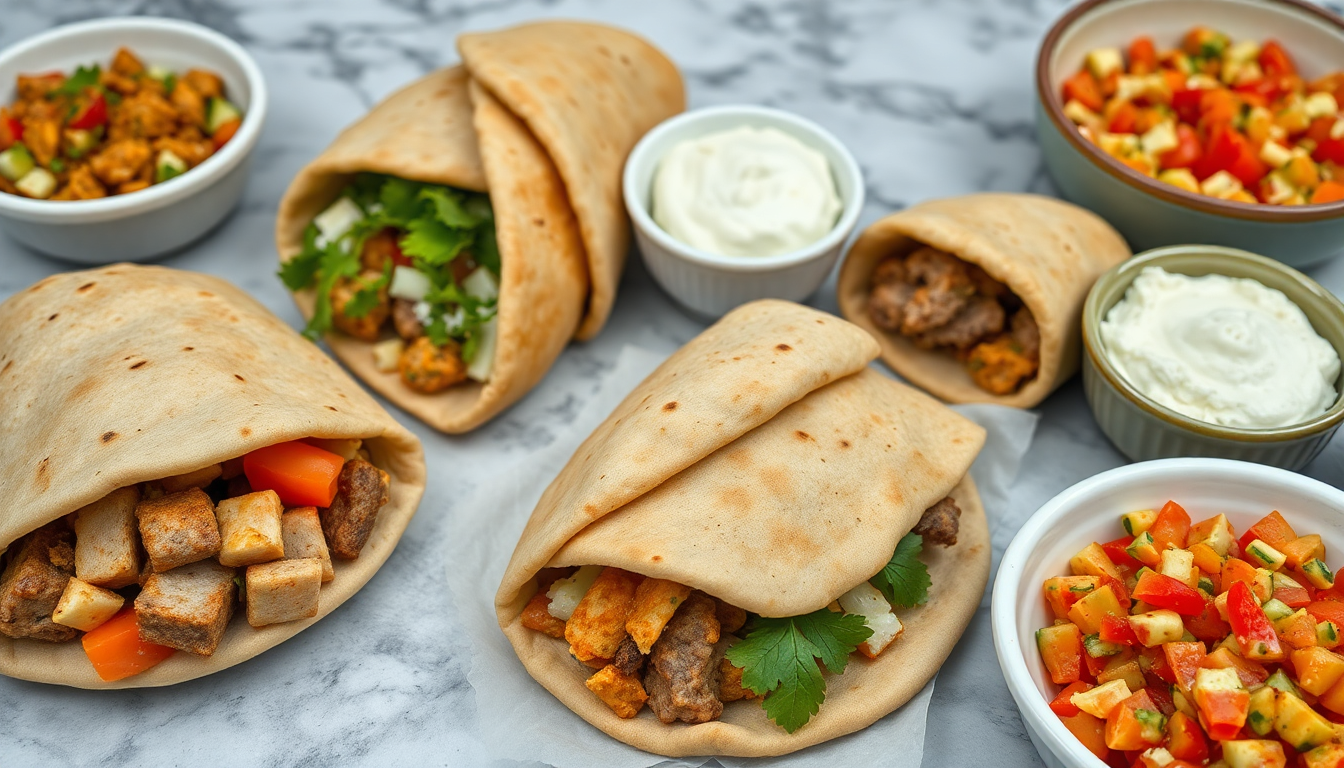
Sandwiches · Mediterranean · Fresh
Greek Pita Sandwiches
The complete guide to building authentic Greek wraps—three protein options, proper bread selection, and the assembly technique that prevents soggy sandwiches
The Greek pita sandwich is not a single recipe—it is a format. Walk through any neighborhood in Athens and you will find variations built around grilled chicken, spiced pork, falafel, or halloumi cheese, all wrapped in the same soft, pocketless pita with tzatziki, vegetables, and feta. Understanding this format matters because it explains why certain combinations work and why others fail. The bread must be sturdy enough to hold without tearing, the sauce must provide moisture without causing sogginess, and the filling must deliver protein and flavor in every bite.
This guide covers Greek pita sandwiches completely: the bread selection that determines structural integrity, three distinct filling approaches for different dietary needs and time constraints, the assembly sequence that prevents the common failure modes (soggy bread, falling-apart wraps, unbalanced bites), and the storage strategies for meal prep. Whether your search is for greek recipes with pita bread for a weeknight dinner or a deeper understanding of how to build Greek pita sandwiches that hold up to travel and time, this article addresses the practical techniques that separate restaurant-quality results from disappointing approximations.
The Foundation: Greek Pita vs Middle Eastern Pita
The single most important decision in a Greek pita sandwich is the bread. Most home cooks fail here before they begin, using thin, brittle pocket pita that cracks when folded and dissolves when moistened. Understanding the difference between bread styles explains why.
Greek Pita: The Pocketless Tradition
Authentic Greek pita contains no pocket. It is a soft, fluffy, slightly chewy flatbread approximately 1/4-inch thick, enriched with olive oil that keeps it pliable even when cooled. The surface puffs slightly during cooking, creating a tender interior and lightly blistered exterior. Greek pita is designed to wrap around fillings—it folds without cracking, absorbs sauce without disintegrating, and provides enough structure to hold ingredients together without being tough.
The olive oil in the dough is functional, not merely flavorful. It creates a barrier that slows moisture absorption from fillings, giving you 15-20 minutes of eating time before sogginess sets in. This matters for street food—Athenians often eat these sandwiches while walking, and the bread must survive a 10-minute commute without turning to mush.
Middle Eastern Pocket Pita: The Wrong Tool
Pocket pita—the thin, hollow-centered bread common at Lebanese and Israeli restaurants—serves a different purpose. It is designed to be split open and stuffed, not wrapped. The thin walls crack when folded around wet fillings. The pocket creates structural weakness at the seam. Using pocket pita for Greek-style sandwiches produces the exact failures most home cooks experience: tearing, sogginess, and fillings falling out the bottom.
If you cannot find Greek pita, substitute flatbread, naan, or even flour tortillas. These options perform better than pocket pita for wrap-style sandwiches. The ideal Greek pita is available at Mediterranean markets or can be made at home with flour, water, yeast, salt, and olive oil.
Source Greek pita at: Mediterranean markets (look for "Greek pita" or "souvlaki bread"), specialty bakeries in cities with Greek communities, or online Mediterranean food retailers. Avoid thin "pocket pita" or "Middle Eastern pita"—the packaging usually indicates the distinction. If the bread feels stiff or brittle when cold, it will crack when wrapped.
Three Filling Approaches: Chicken, Turkey, and Vegetarian
The protein choice changes the character of the sandwich. These three approaches cover the spectrum from traditional to modern, from meat-heavy to plant-based, each with distinct flavor profiles and cooking methods.
Approach 1: Grilled Chicken (The Classic)
Grilled chicken is the most common filling for home-cooked Greek pita sandwiches—accessible, quick-cooking, and universally appealing. The key is proper marination and cooking technique. Marinate chicken breast or tenders in a mixture of olive oil, lemon juice, dried oregano, garlic powder, salt, and pepper for minimum 30 minutes, ideally 2-4 hours. The acid tenderizes while the oil carries fat-soluble flavor compounds into the meat.
Grill over high heat—4 minutes per side for tenders, 6-7 minutes per side for breast—until internal temperature reaches 165°F. Rest 5 minutes before slicing thinly against the grain. Slice thin; thick chunks make the sandwich unwieldy and deliver unbalanced bites. The chicken should be warm when assembled—hot protein against cool tzatziki creates the temperature contrast that defines the experience.
Approach 2: Spiced Ground Turkey (The Weeknight Option)
Ground turkey provides a lighter, faster alternative that cooks in a skillet in 15 minutes. The spice blend transforms mild turkey into something distinctly Mediterranean: cumin for earthiness, smoked paprika for depth and color, cinnamon for warmth, and oregano for the essential Greek identification. Sauté diced onion and bell pepper until soft, add the turkey and spices, cook until browned and crumbly.
This filling is more forgiving than grilled chicken—it stays moist longer, reheats better, and works well for meal prep. The crumbly texture distributes more evenly through the sandwich than sliced meat, ensuring balanced bites. A squeeze of lemon juice at the end of cooking brightens the flavor and cuts through the richness of the meat and tzatziki.
Approach 3: Mediterranean Chickpea (The Vegetarian)
Vegetarian Greek sandwiches are not modern compromises—they are traditional options rooted in Orthodox fasting customs that prohibit meat for roughly half the year. Chickpeas provide the protein base, combined with diced cucumber, cherry tomatoes, and Kalamata olives dressed in olive oil and lemon. The combination delivers salt, acid, freshness, and substance.
The chickpea filling benefits from a brief marination—15-30 minutes—to allow flavors to meld. Unlike meat fillings, this version works well at room temperature or even cold, making it ideal for packed lunches. For additional protein and richness, add crumbled feta or grilled halloumi cheese. The cheese provides the umami depth that might otherwise be missed from the absence of meat.
| Filling | Cook Time | Protein/Serving | Best For |
|---|---|---|---|
| Grilled Chicken | 20-25 min incl. marination | 30-35g | Authentic experience, grilling weather |
| Spiced Turkey | 15 min stovetop | 25-28g | Weeknight cooking, meal prep |
| Chickpea | 10 min (no cooking) | 12-15g (18g with feta) | Vegetarian, packed lunches |
The Essential Components Beyond Protein
A Greek pita sandwich requires specific supporting ingredients. Skipping or substituting these changes the character of the dish.
Tzatziki: The Non-Negotiable Sauce
Tzatziki is not optional—it defines the sandwich. The cool, garlicky yogurt sauce provides temperature contrast, moisture, and the acidic brightness that cuts through rich meat. Authentic tzatziki uses strained Greek yogurt (full-fat for best texture), cucumber that has been salted and squeezed to remove excess water, raw minced garlic, fresh dill or mint, lemon juice, and olive oil.
The cucumber preparation matters. Grate the cucumber, toss with salt, let drain 10-15 minutes, then squeeze firmly in a clean towel until no liquid remains. Unsqueezed cucumber releases water that thins the yogurt and creates a runny sauce that soaks the bread. Tzatziki should be thick enough to hold its shape when dolloped—if it spreads like milk, your cucumber was not drained sufficiently.
Vegetables: Texture and Freshness
The standard vegetables provide specific functions: cucumber adds cool crunch and high water content that balances rich meat; tomato contributes acidity and juiciness; red onion delivers sharp pungency that cuts through fat; lettuce or spinach provides bulk and additional texture. Pat vegetables dry before assembly—excess moisture is the enemy of sandwich integrity.
Spinach is superior to iceberg lettuce for these sandwiches. It wilts slightly when warm meat is added, integrating into the sandwich rather than falling out. Romaine works as a substitute but lacks the same integration. Avoid watery vegetables like shredded iceberg or sliced tomatoes that have not been drained.
Feta Cheese: The Salty Anchor
Feta provides salt, umami, and the distinctive tang that signals "Greek" immediately. Use authentic Greek feta made from sheep's milk (or sheep and goat blend), not "feta-style" cheese made from cow's milk. The difference in flavor and texture is significant—authentic feta is saltier, tangier, and crumbles rather than slices. Add feta last during assembly to prevent it from being crushed by heavier ingredients.
Hummus: The Optional Enrichment
Hummus is not traditional in all Greek pita sandwiches but has become common in modern versions, particularly vegetarian preparations. It adds creaminess, protein, and a binding quality that helps hold ingredients together. If using hummus, spread it directly on the pita as the base layer, then add tzatziki on top or serve it on the side. Too many creamy components create a texture problem—choose hummus or extra tzatziki, not both in equal measure.
The Assembly Sequence: Preventing Failure
The order of assembly matters more than most recipes acknowledge. Proper layering prevents the three common failure modes: soggy bread, falling-apart wraps, and unbalanced bites.
Step-by-Step Assembly
1. Warm the pita: Cold pita is brittle and cracks. Warm in a dry skillet 30 seconds per side, or wrap in foil and heat 5 minutes in a 350°F oven. The pita should be soft, flexible, and warm to the touch.
2. Spread the sauce base: Apply tzatziki (and hummus if using) across the center of the pita, leaving 1-inch margins on the edges. This creates a moisture barrier and flavor foundation.
3. Add lettuce or spinach: This creates a physical barrier between the sauce and the warm protein, slowing sogginess and adding crisp texture.
4. Layer the protein: Arrange chicken, turkey, or chickpeas in a line down the center. Do not pile high—spread the protein to distribute it evenly.
5. Top with vegetables: Add cucumber, tomato, and onion. These should be patted dry and arranged for even distribution.
6. Add feta and herbs: Crumble feta and sprinkle fresh dill or parsley over the top.
7. Wrap tightly: Fold the bottom third up to create a base, fold one side over the center, then roll tightly toward the opposite edge. The wrap should be snug and hold its shape when held vertically.
The Parchment Paper Technique
Professional souvlaki stands use parchment paper or foil to hold shape and catch drips. Place the filled pita on a sheet of parchment, perform the wrap, then twist the bottom to secure. This allows eating while walking, catches any escaping tzatziki, and provides structural support for heavy fillings.
Sogginess Prevention: The Science
Soggy pita is the most common complaint about homemade Greek sandwiches. Understanding the mechanisms of sogginess helps prevent it.
The Moisture Sources
Three sources contribute to sogginess: water released by vegetables (especially cucumber and tomato), liquid from the protein (particularly if using watery yogurt sauce or under-drained tzatziki), and steam condensation if the sandwich is wrapped while hot and left to sit. Each requires a different countermeasure.
Prevention Strategies
Drain vegetables: Pat cucumber and tomato slices with paper towels before assembly. Salted, drained cucumbers release 30-40% less water than raw.
Use thick tzatziki: Properly made tzatziki with drained cucumber and full-fat yogurt holds its shape. Runny tzatziki soaks bread immediately.
Create barriers: The sauce-spread-then-lettuce technique creates a hydrophobic layer that slows moisture migration from protein to bread.
Assemble to order: Pre-assembled sandwiches have a 4-6 hour lifespan before sogginess becomes severe. For meal prep, store components separately.
Don't overheat pita: Pita that is too hot when assembled creates steam that condenses into moisture. Warm, not hot, is the target temperature.
Meal Prep and Storage Strategies
Greek pita sandwiches can be prepared in advance with proper component management. The key is understanding which elements degrade and which improve over time.
Component Storage
Cooked protein: Grilled chicken and spiced turkey keep 3-4 days refrigerated. Store in airtight containers with minimal air exposure. Reheat gently—microwaving toughens meat; a quick pan-fry or 5 minutes in a 350°F oven works better.
Tzatziki: Improves over 24 hours as flavors meld. Keeps 5 days refrigerated. If water separates, stir to reincorporate. Make a fresh batch if it develops off odors or separates excessively.
Vegetables: Pre-cut cucumber and tomatoes degrade fastest—2-3 days maximum before texture suffers. Store cut vegetables in containers lined with paper towels to absorb moisture. Do not pre-dress vegetables; store them plain and assemble fresh.
Pita: Store at room temperature 2-3 days, or freeze 2-3 months. Refrigeration accelerates staling—avoid it. Reheat frozen pita directly from freezer in a hot skillet or 350°F oven wrapped in foil.
The Assembly Timeline
Same day (optimal): Assemble and eat immediately after warming components. This produces the best texture and temperature contrast.
Morning-of: Assemble sandwiches for lunch up to 4 hours ahead. Wrap tightly in parchment or foil, refrigerate if possible. The sandwich will soften slightly but remains edible.
Night-before: Assemble for next-day lunch only if using sturdy vegetables (skip tomatoes, use spinach not lettuce) and thick tzatziki. Refrigerate immediately. Expect some sogginess—this is the compromise for convenience.
Frequently Asked Questions
What is the difference between Greek pita and regular pita bread?
Greek pita is pocketless—soft, fluffy, and pliable without the hollow center found in Middle Eastern pita. It contains olive oil in the dough, keeping it tender even when cooled. Greek pita is designed for wrapping around fillings like souvlaki and gyro meat, while Middle Eastern pita is meant to be split open and stuffed. The thickness and flexibility of Greek pita makes it superior for sandwiches that need to hold together without cracking.
Can I use pocket pita for Greek pita sandwiches?
You can, but the results differ. Pocket pita is thinner and tends to crack or tear when wrapped around juicy fillings. If using pocket pita, warm it thoroughly before assembly and avoid overstuffing. The ideal Greek pita is pocketless, approximately 1/4-inch thick, soft enough to fold without breaking, and sturdy enough to hold fillings without becoming soggy. If pocket pita is your only option, consider making it an open-faced sandwich rather than a wrap.
How do I keep my pita sandwich from getting soggy?
Three techniques prevent sogginess: First, spread tzatziki or hummus on the pita first—it creates a moisture barrier between bread and juicy ingredients. Second, pat vegetables dry and use spinach rather than iceberg lettuce, which wilts quickly. Third, assemble just before eating. If meal prepping, store components separately and build the sandwich when ready to eat. Warm pita also resists sogginess better than cold pita, which absorbs moisture faster.
What meat works best for Greek pita sandwiches?
Chicken is most common for home cooks—marinate and grill for authentic flavor. Ground turkey spiced with cumin and paprika provides a lighter option that cooks quickly. For the most authentic experience, use grilled pork souvlaki or shaved gyro meat. Vegetarian versions with spiced chickpeas, halloumi cheese, or falafel are equally traditional in Greek cuisine, particularly during Orthodox fasting periods when meat is prohibited.
Can I make Greek pita sandwiches ahead for meal prep?
Store components separately for best results. Cooked meat keeps 3-4 days refrigerated. Tzatziki lasts 5 days. Vegetables should be prepped fresh daily—store cut tomatoes and cucumbers in containers lined with paper towels to absorb moisture. Assemble sandwiches morning-of or night-before at earliest. Pre-assembled sandwiches become soggy after 4-6 hours as bread absorbs moisture from vegetables and sauce. For a week of lunches, cook protein and make tzatziki on Sunday, prep vegetables each morning, and assemble fresh.
Is hummus traditional in Greek pita sandwiches?
Hummus is increasingly common but not universally traditional. Classic Greek street food sandwiches use tzatziki as the primary sauce. Modern versions, particularly vegetarian preparations, often include hummus for additional protein and creaminess. If you want the most authentic experience, use tzatziki alone. If you want a more substantial vegetarian sandwich, hummus adds nutrition and helps bind the filling. The combination of both tzatziki and hummus is delicious but can overwhelm the bread—use moderate amounts of each.
What cheese should I use for Greek pita sandwiches?
Authentic Greek feta made from sheep's milk (or sheep and goat blend) is the traditional choice. It is saltier, tangier, and crumbles more readily than cow's milk "feta-style" cheese. The salt content of feta is functional—it seasons the entire sandwich. If you cannot find authentic Greek feta, look for Bulgarian or French feta as alternatives. Avoid pre-crumbled feta sold in plastic containers; it contains anti-caking agents that alter texture. Buy blocks of feta and crumble it yourself.
Conclusion: The Format That Defines Greek Street Food
The Greek pita sandwich is a format, not a single recipe. Understanding this distinction liberates you from following rigid instructions while ensuring your creations remain recognizably Greek. The essentials are: pocketless pita that wraps without cracking, tzatziki as the primary sauce, protein that delivers flavor and substance, vegetables that add freshness and texture, and feta that provides salt and tang. Within this framework, you can improvise—substituting turkey for chicken, chickpeas for meat, or adding hummus for extra richness—without losing the essential character of the dish.
The technical challenges that defeat most home cooks—soggy bread, falling-apart wraps, unbalanced bites—have specific solutions rooted in understanding the ingredients. Warm your pita. Drain your cucumber for tzatziki. Pat your vegetables dry. Assemble in the proper sequence. These are not arbitrary steps; they address the specific physics of moisture migration, structural integrity, and heat transfer that determine whether a sandwich holds together for 5 minutes or 30.
For the complete Greek meal, serve your pita sandwiches with a side of dolmades, spanakopita, or simply extra tzatziki for dipping. For more ways to use your pita bread, explore our guide to Greek recipes with pita bread and traditional Greek recipes. The pita sandwich is portable, practical, and deeply satisfying—Greek street food at its finest, now achievable in your own kitchen.