Mediterranean Diet Food List
What to Eat and What to Avoid
The Mediterranean diet is built around simple, natural foods that support long-term health and balanced nutrition. Instead of strict calorie counting, this eating pattern focuses on whole foods, healthy fats, and plant-based ingredients that form the foundation of daily meals.
Most Mediterranean-style eating patterns emphasize vegetables, fruits, whole grains, legumes, nuts, olive oil, and fish, while limiting processed foods and red meat.
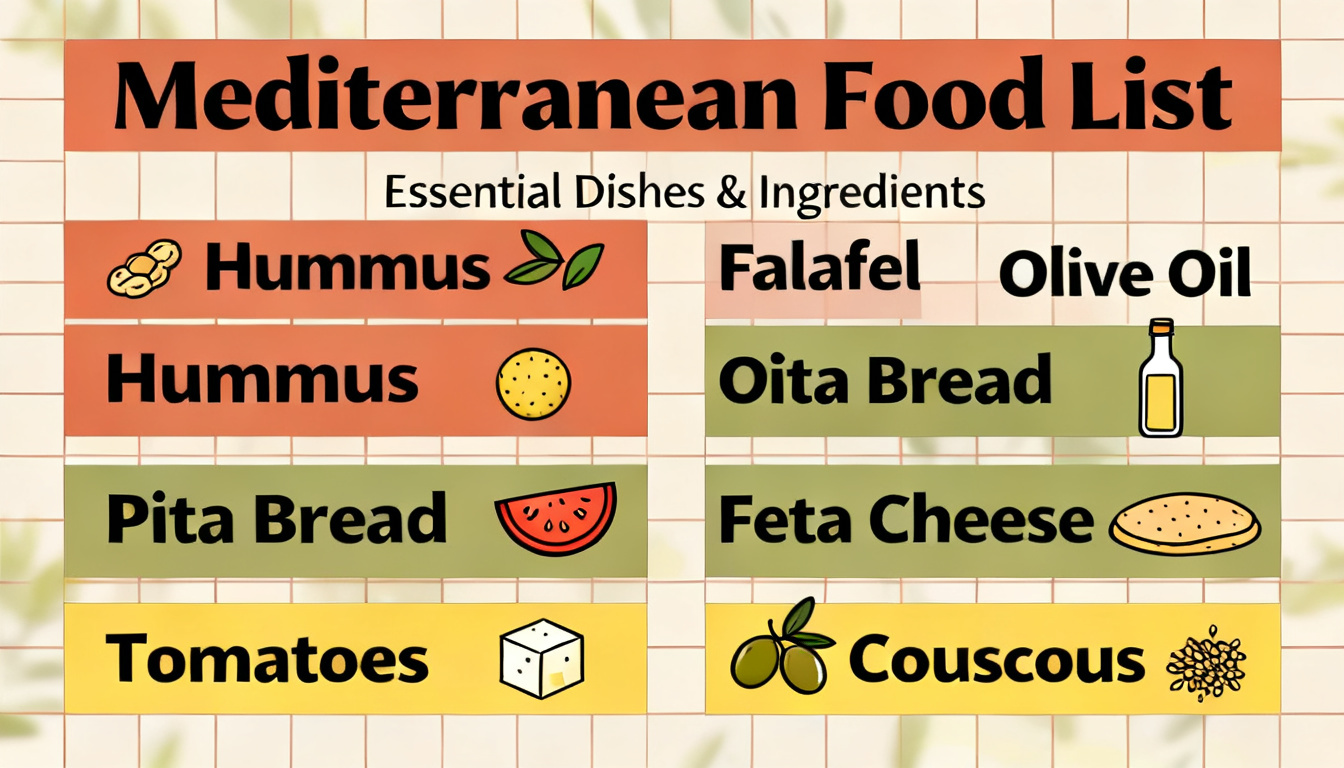
This guide provides a complete Mediterranean diet food list, organized into practical categories that make meal planning and grocery shopping easier. If you're new to this eating pattern, our Mediterranean Diet guide provides a comprehensive overview of the core principles.
Mediterranean Diet Food List Overview
The Mediterranean diet encourages eating certain foods more frequently than others.
In general:
Eat Most Often
- Vegetables
- Fruits
- Whole grains
- Legumes
- Nuts and seeds
- Olive oil
Eat in Moderation
- Fish and seafood
- Poultry
- Eggs
- Dairy
Limit
- Red meat
- Processed foods
- Sugary foods
- Refined grains
This balanced structure reflects traditional eating patterns in Mediterranean regions, where minimally processed plant foods make up the majority of daily meals.
Vegetables to Eat on the Mediterranean Diet
Vegetables are the foundation of the Mediterranean diet and should be included in most meals.
Aim to eat vegetables daily, preferably in a variety of colors.
Best Mediterranean Diet Vegetables
Leafy Greens:
- Spinach
- Kale
- Arugula
- Swiss chard
- Romaine lettuce
Cruciferous Vegetables:
- Broccoli
- Cauliflower
- Brussels sprouts
- Cabbage
Mediterranean Favorites:
- Tomatoes
- Eggplant
- Zucchini
- Bell peppers
- Cucumbers
- Onions
- Garlic
Root Vegetables:
- Carrots
- Beets
- Sweet potatoes
- Potatoes
Vegetables provide fiber, vitamins, and antioxidants that support digestion, heart health, and immune function.
Fruits to Include in Your Mediterranean Diet
Fruit is commonly eaten daily and often replaces sugary desserts.
Recommended Fruits
Fresh Fruits:
- Apples
- Oranges
- Pears
- Grapes
- Berries
- Peaches
- Plums
- Figs
- Melons
Mediterranean Favorites:
- Pomegranates
- Dates
- Citrus fruits
- Olives (botanically a fruit)
Fruits supply natural sweetness along with fiber and antioxidants that support overall health.
Whole Grains and Cereals
Whole grains provide long-lasting energy and support digestive health.
Healthy Whole Grain Options
- Brown rice
- Whole wheat bread
- Whole wheat pasta
- Oats
- Barley
- Bulgur
- Farro
- Quinoa
- Couscous
Whole grains are commonly used in Mediterranean cooking and help maintain stable blood sugar levels.
Legumes and Beans
Legumes are a major protein source in Mediterranean diets.
They are affordable, nutritious, and extremely versatile.
Common Legumes
- Lentils
- Chickpeas
- Black beans
- Kidney beans
- Cannellini beans
- Peas
- Fava beans
These foods provide fiber, plant-based protein, and important nutrients that support heart health and digestion.
Nuts and Seeds
Nuts and seeds provide healthy fats and are often eaten as snacks or added to meals.
Recommended Nuts and Seeds
Nuts:
- Almonds
- Walnuts
- Pistachios
- Hazelnuts
- Cashews
Seeds:
- Sunflower seeds
- Pumpkin seeds
- Sesame seeds
- Chia seeds
Eating nuts regularly has been associated with improved heart health and reduced inflammation.
Healthy Fats and Oils
Healthy fats are a defining feature of the Mediterranean diet.
Essential Healthy Fats
- Extra virgin olive oil
- Olives
- Avocados
- Nuts and nut oils
Olive oil is the primary fat source, replacing butter and processed oils in most recipes.
Fish and Seafood
Fish is a key protein source in Mediterranean-style eating.
Experts often recommend eating fish at least twice per week.
Recommended Fish and Seafood
Fatty Fish:
- Salmon
- Sardines
- Mackerel
- Tuna
- Trout
Other Seafood:
- Shrimp
- Mussels
- Clams
- Crab
- Oysters
Fish provides omega-3 fatty acids that support heart and brain health.
Poultry and Eggs (Moderate Consumption)
Poultry and eggs are included in moderation.
Examples
Poultry:
- Chicken
- Turkey
- Duck
Eggs:
- Chicken eggs
- Quail eggs
These foods provide protein but should be consumed less frequently than plant-based foods.
Dairy Products (In Moderation)
Dairy is included in smaller amounts compared to Western diets.
Recommended Dairy Options
- Greek yogurt
- Natural yogurt
- Feta cheese
- Parmesan cheese
- Mozzarella
Fermented dairy products are commonly preferred.
They provide calcium and probiotics that support gut health.
Herbs, Spices, and Flavor Enhancers
Herbs and spices replace excessive salt and improve flavor naturally.
Mediterranean Herbs
- Basil
- Oregano
- Rosemary
- Thyme
- Mint
- Parsley
Other Flavor Ingredients:
- Garlic
- Lemon juice
- Vinegar
These ingredients enhance flavor while supporting heart health by reducing sodium intake.
Foods to Limit on the Mediterranean Diet
Certain foods should be eaten sparingly.
These foods are not completely forbidden but should be minimized.
Limit These Foods
Red Meat:
- Beef
- Pork
- Lamb
Processed Foods:
- Sausages
- Hot dogs
- Packaged snacks
Sugary Foods:
- Candy
- Pastries
- Sweetened drinks
Refined Grains:
- White bread
- Sugary cereals
Highly processed foods and added sugars are associated with increased risk of chronic disease and should be limited.
Mediterranean Diet Shopping List (Beginner-Friendly)
This simple shopping list helps beginners get started.
Vegetables
- Tomatoes
- Spinach
- Zucchini
- Bell peppers
- Onions
Fruits
- Apples
- Oranges
- Berries
- Grapes
Pantry Staples
- Olive oil
- Whole grains
- Beans
- Lentils
- Nuts
Protein Sources
- Fish
- Chicken
- Eggs
- Yogurt
Stocking your kitchen with these foods makes following the Mediterranean diet much easier. For a more detailed shopping guide, our Mediterranean Diet Shopping List page provides comprehensive information.
Mediterranean Diet Food Pyramid Explained
The Mediterranean diet is often visualized as a pyramid.
At the bottom (eat daily):
- Vegetables
- Fruits
- Whole grains
- Olive oil
Middle levels:
- Fish
- Poultry
- Dairy
Top level (eat rarely):
- Red meat
- Sweets
This pyramid structure encourages balance and sustainability in long-term eating habits.
Tips for Building Mediterranean Meals
Building Mediterranean-style meals becomes easier with practice.
Helpful strategies:
- Fill half your plate with vegetables
- Use olive oil instead of butter
- Choose whole grains instead of refined grains
- Include legumes regularly
- Eat fish multiple times per week
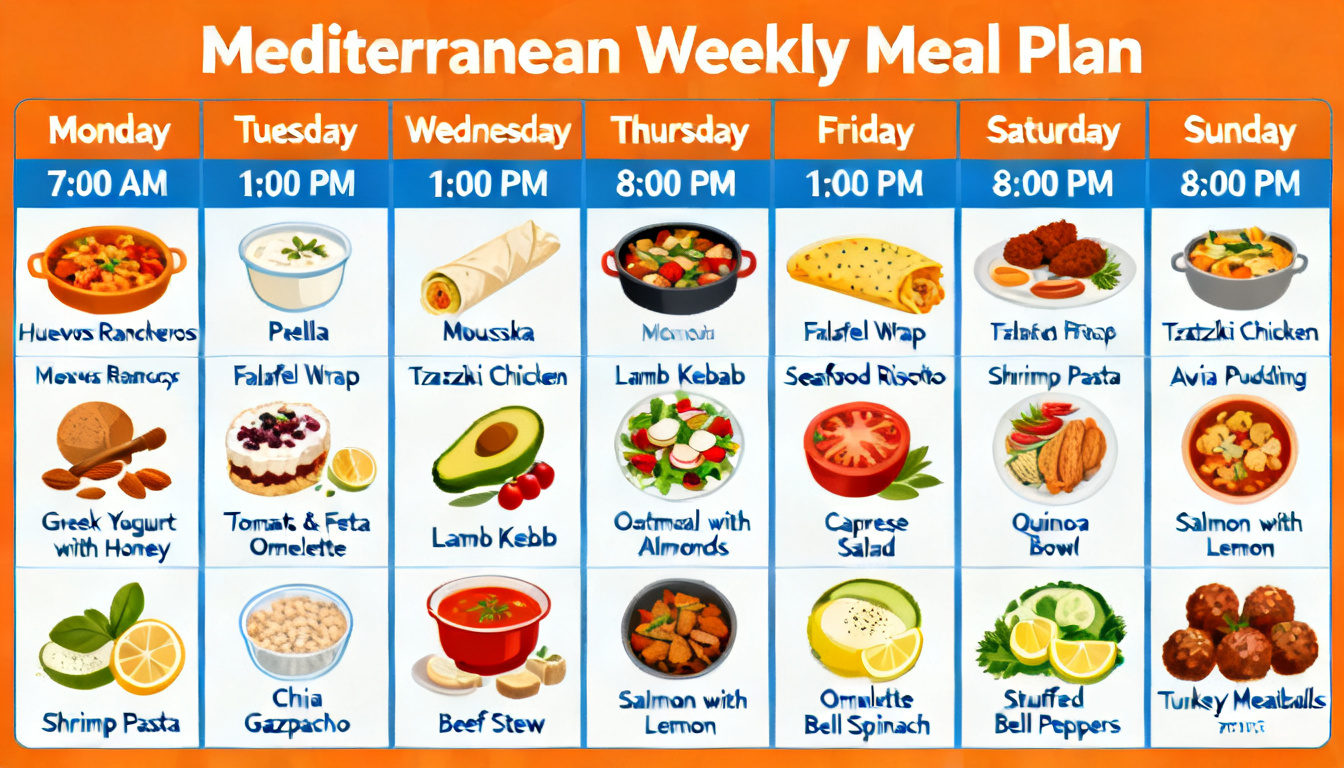
These habits support long-term success and make the diet sustainable. For a complete 7-day meal plan using these ingredients, check out our Mediterranean Diet Meal Plan.
Final Thoughts
A Mediterranean diet food list is not about strict rules—it's about creating meals built around fresh, whole, and minimally processed ingredients.
By focusing on vegetables, fruits, whole grains, healthy fats, and lean proteins, you can build a sustainable eating pattern that supports heart health, weight management, and long-term wellness.
This page should act as your go-to reference whenever you plan meals, shop for groceries, or start transitioning into Mediterranean-style eating.