Mediterranean Diet Meal Plan
A Simple 7-Day Plan You Can Actually Follow
Starting the Mediterranean diet can feel overwhelming at first, especially if you're unsure what a full day of meals should look like. Many people understand the idea—more vegetables, olive oil, and fish—but struggle to turn that idea into real meals.
That's exactly why having a structured meal plan makes a huge difference. If you're new to this eating pattern, our Mediterranean Diet guide explains the core principles in detail.
This 7-day Mediterranean diet meal plan is designed to be practical, realistic, and flexible. It uses everyday ingredients and balanced meals that reflect how Mediterranean-style eating works in real life—not in theory.
Instead of strict rules, this plan shows how to build meals around whole foods that support energy, heart health, and long-term wellness.
How This Mediterranean Meal Plan Works
Before jumping into the meals, it helps to understand the thinking behind them.
Mediterranean-style eating isn't about perfection. It's about balance.
Each day in this plan includes:
- A balanced breakfast to provide steady morning energy
- A satisfying lunch built around vegetables and healthy fats
- A nutrient-rich dinner with lean protein and whole grains
- Simple snacks to prevent overeating later
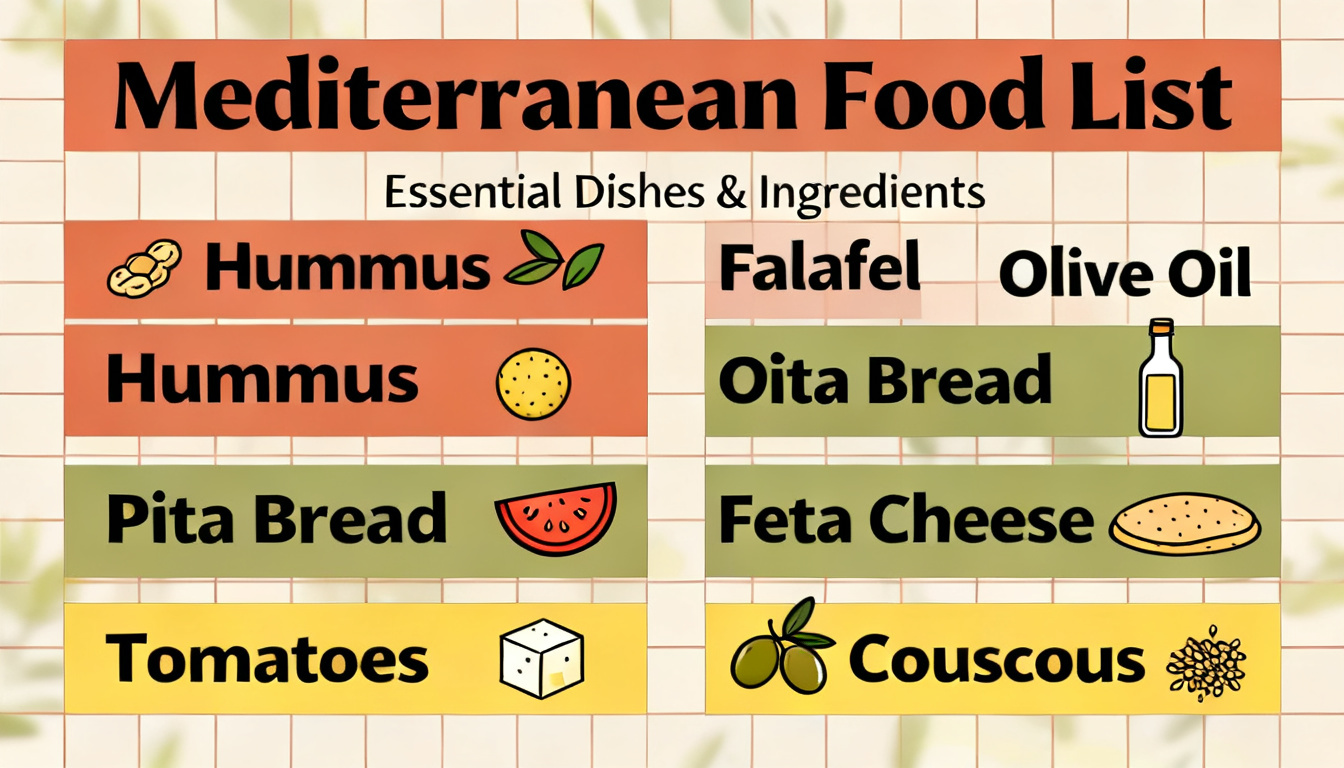
Meals are built around foods commonly used in Mediterranean kitchens, such as olive oil, vegetables, legumes, fish, yogurt, and whole grains. For a complete guide to these ingredients, our Mediterranean Diet Food List provides detailed information.
You can swap ingredients when needed—the structure matters more than the exact recipe.
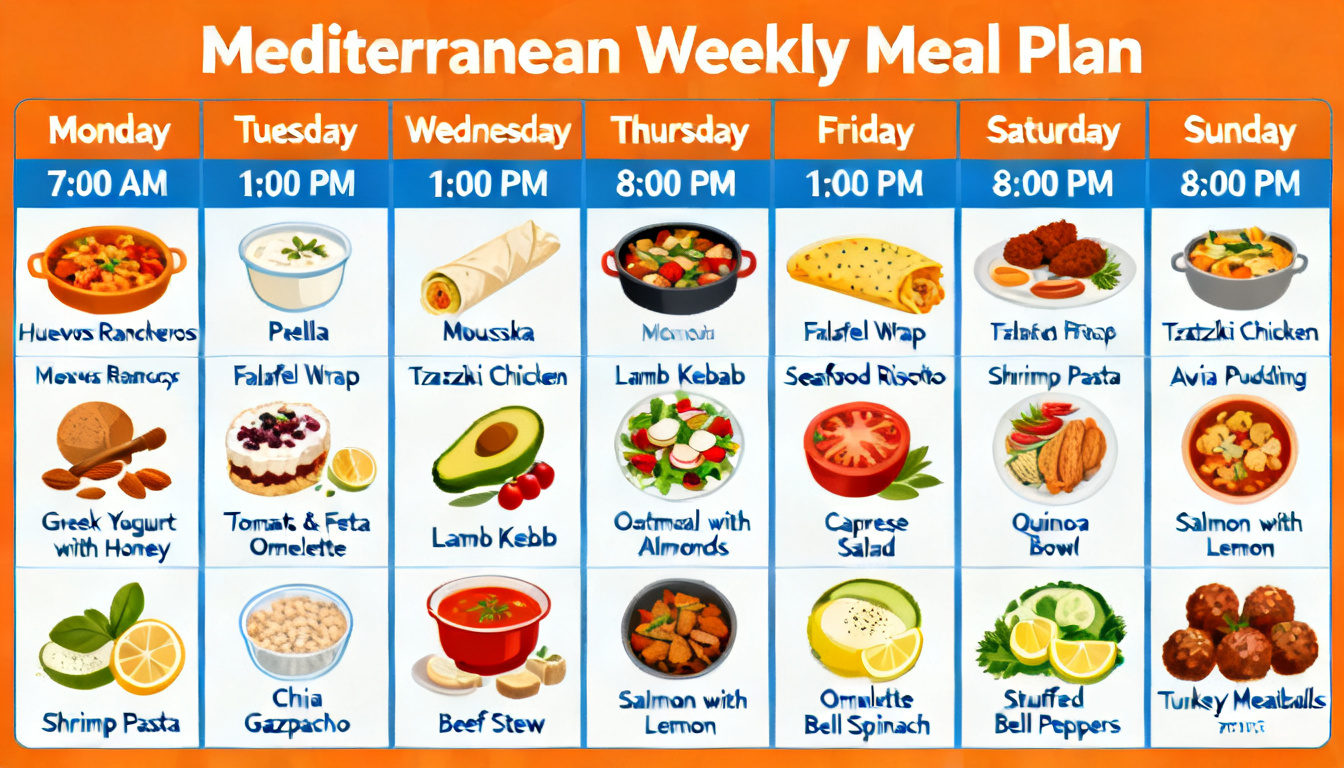
7-Day Mediterranean Diet Meal Plan
This weekly plan gives you a realistic idea of how Mediterranean meals fit into everyday life.
Day 1 – A Fresh Start With Simple Ingredients
Breakfast
Greek yogurt with fresh berries and a handful of walnuts.
This breakfast works well because it combines protein, fiber, and healthy fats, which helps keep you full for several hours. Yogurt supports digestion, berries provide antioxidants, and walnuts add heart-healthy fats.
Lunch
Mediterranean chickpea salad with cucumbers, tomatoes, olive oil, and lemon.
This type of salad reflects the Mediterranean habit of building meals around vegetables rather than meat. Chickpeas provide plant-based protein that helps maintain steady energy levels.
Dinner
Grilled salmon with roasted vegetables and brown rice.
Salmon is rich in omega-3 fatty acids, which support heart and brain health. Roasted vegetables add fiber and flavor, while brown rice provides slow-releasing energy.
Snacks
Fresh fruit and a small handful of almonds.
Snacks like these prevent energy crashes and reduce cravings for processed foods.
Day 2 – Balanced and Comforting Meals
Breakfast
Whole-grain toast with avocado and sliced tomatoes.
This simple breakfast is filling and nutrient-dense. Avocado provides healthy fats that support heart health, while whole grains offer long-lasting energy.
Lunch
Lentil soup with a side of mixed greens.
Lentils are one of the most important foods in Mediterranean cooking. They are affordable, rich in protein, and highly satisfying.
Dinner
Baked chicken with roasted zucchini and quinoa.
Chicken is used in moderation in Mediterranean diets. Pairing it with vegetables and whole grains keeps meals balanced without feeling heavy.
Snacks
Plain yogurt with honey and chopped nuts.
This snack provides protein and natural sweetness without relying on refined sugar.
Day 3 – Light but Nourishing Meals
Breakfast
Oatmeal topped with sliced apples and cinnamon.
Oats provide fiber that supports digestion and helps maintain steady blood sugar levels throughout the morning.
Lunch
Whole-grain pita stuffed with hummus and roasted vegetables.
Hummus, made from chickpeas and olive oil, is a staple Mediterranean food. It adds creaminess and protein while keeping meals plant-based.
Dinner
Grilled shrimp with spinach salad and olive oil dressing.
Shrimp offers lean protein, while leafy greens provide vitamins and minerals essential for overall health.
Snacks
Fresh grapes or orange slices.
Fruits are commonly used as natural snacks in Mediterranean cultures.
Day 4 – Simple Meals With Bold Flavor
Breakfast
Greek yogurt with sliced banana and sunflower seeds.
Seeds add texture and healthy fats, making breakfast more satisfying.
Lunch
Mediterranean tuna salad with olives, tomatoes, and olive oil.
This meal is rich in omega-3 fats and antioxidants, making it excellent for heart health.
Dinner
Vegetable stir with eggplant, peppers, and chickpeas over brown rice.
Plant-based dinners like this are common in Mediterranean households and provide a balance of protein and fiber.
Snacks
Carrot sticks with hummus.
This snack supports healthy digestion and keeps hunger under control.
Day 5 – Classic Mediterranean Flavors
Breakfast
Whole-grain toast with natural peanut butter and sliced strawberries.
This combination offers healthy fats, fiber, and natural sweetness.
Lunch
Quinoa salad with cucumber, parsley, and lemon dressing.
Herbs play an important role in Mediterranean cooking, adding flavor without relying on excess salt.
Dinner
Grilled fish with roasted sweet potatoes and green beans.
Fish provides essential nutrients while sweet potatoes offer fiber and steady energy.
Snacks
A handful of mixed nuts.
Nuts are widely consumed in Mediterranean regions and support heart health.
Day 6 – Comforting Weekend Meals
Breakfast
Scrambled eggs with spinach and whole-grain toast.
Eggs provide high-quality protein and help maintain muscle strength.
Lunch
Tomato and vegetable soup with whole-grain bread.
Soup-based meals are satisfying while remaining light and nutritious.
Dinner
Roasted chicken with vegetables and farro.
Farro is a traditional Mediterranean grain known for its nutty flavor and high fiber content.
Snacks
Fresh berries or apple slices.
Simple fruit snacks support steady energy levels.
Day 7 – Relaxed and Flexible Eating
Breakfast
Yogurt parfait layered with fruit and granola.
This meal is flexible and easy to prepare, making it ideal for relaxed mornings.
Lunch
Mediterranean vegetable wrap with hummus.
Wraps make healthy eating convenient without sacrificing flavor.
Dinner
Grilled seafood with roasted vegetables and couscous.
Ending the week with seafood reflects the Mediterranean tradition of regular fish consumption.
Snacks
Olives and a handful of nuts.
Olives are a central ingredient in Mediterranean cooking and provide healthy fats.
Why This Meal Plan Works
Many diets fail because they are too restrictive or unrealistic.
This Mediterranean meal plan works because it:
- Uses familiar ingredients
- Encourages variety
- Avoids extreme restrictions
- Focuses on long-term habits
- Supports balanced nutrition
Rather than forcing drastic changes, it introduces healthier meals in a natural way.
How to Customize This Mediterranean Meal Plan
No meal plan should feel rigid.
You can adjust meals based on:
- Food preferences
- Seasonal ingredients
- Budget considerations
- Dietary restrictions
For example:
- Replace fish with legumes if vegetarian
- Swap quinoa for brown rice
- Use local vegetables when possible
Flexibility makes this eating style sustainable.
Mediterranean Diet Meal Prep Tips
Planning ahead makes this diet easier to follow.
Helpful preparation tips include:
- Wash and chop vegetables in advance
- Cook grains in large batches
- Prepare homemade dressings with olive oil
- Keep healthy snacks available
- Store cooked legumes for quick meals
Meal prep reduces stress and prevents last-minute unhealthy choices.
Common Mistakes to Avoid With Meal Plans
Many beginners struggle because of simple mistakes.
Common issues include:
- Overcomplicating meals
- Trying too many new recipes at once
- Skiping snacks and overeating later
- Not preparing ingredients ahead of time
Keeping meals simple leads to better consistency.
How to Transition Into a Mediterranean Eating Routine
You don't need to change everything overnight.
Start small.
- Replace butter with olive oil
- Add one extra vegetable to each meal
- Eat fish once or twice per week
- Choose whole grains over refined grains
Gradual changes are more sustainable than sudden shifts.
Final Thoughts
A Mediterranean diet meal plan isn't meant to be rigid or complicated. It's a flexible framework that helps you build balanced meals using real ingredients that support long-term health.
By focusing on vegetables, whole grains, healthy fats, and lean proteins, this style of eating becomes less about dieting and more about building habits that feel natural and enjoyable.
Over time, these small daily choices can lead to meaningful improvements in energy, digestion, heart health, and overall well-being.
Need help choosing the right ingredients? Visit our Mediterranean Diet Food List for a complete guide to foods you can eat every day.
For recipe ideas to customize this meal plan, check out our Mediterranean Diet Recipes.