Mediterranean Diet for Weight Loss
A Realistic Way to Do It Without Extreme Diets
Many people start searching for weight loss solutions after trying diets that feel too restrictive, confusing, or simply unsustainable. Cutting entire food groups, counting every calorie, or skipping meals might work temporarily—but it rarely lasts.
The Mediterranean diet offers a different path. If you're new to this eating pattern, our Mediterranean Diet guide provides a comprehensive overview of the core principles.
Instead of forcing rapid weight loss, it supports gradual changes that help the body regulate hunger, improve digestion, and build healthier eating habits over time. That's why many people turn to this style of eating after struggling with traditional diet plans.
Weight loss with the Mediterranean diet doesn't usually happen overnight. But when it does happen, it tends to be more stable and easier to maintain—because it's based on everyday meals rather than strict rules.
This guide explains how the Mediterranean diet supports weight loss, why it works differently from crash diets, and how to apply it in a realistic way.
Can You Actually Lose Weight on the Mediterranean Diet?
Yes—but not because of restriction.
Weight loss on the Mediterranean diet happens when meals become naturally balanced. Instead of relying on processed foods that lead to overeating, this eating style focuses on ingredients that help control appetite.
For example, meals rich in vegetables, legumes, and whole grains take longer to digest. That slower digestion helps reduce sudden hunger spikes and keeps you satisfied between meals.
Many people who switch to Mediterranean-style eating begin to notice:
- They feel full sooner during meals
- They snack less frequently
- They feel satisfied without overeating
These small changes gradually create a calorie balance that supports weight loss. To understand the broader health benefits beyond weight management, our Mediterranean Diet Benefits page provides detailed information.
Why the Mediterranean Diet Works for Weight Loss
Some diets focus on cutting calories aggressively. The Mediterranean diet works differently—it changes how your body responds to food.
Several factors make this eating style effective.
It Helps Control Hunger Naturally
One of the biggest obstacles to weight loss is hunger.
Meals built around fiber-rich foods—like vegetables, beans, and whole grains—help regulate appetite. Fiber slows digestion and helps the stomach feel full longer.
Healthy fats also play a role.
Unlike low-fat diets that leave people feeling unsatisfied, Mediterranean meals include fats from olive oil, nuts, and fish. These fats improve meal satisfaction and reduce the urge to keep eating.
When meals feel satisfying, overeating becomes less likely.
It Reduces Reliance on Processed Foods
Processed foods are often high in calories but low in nutrients. They digest quickly, leading to repeated hunger cycles.
Mediterranean-style meals rely on:
- Fresh vegetables
- Whole grains
- Lean proteins
- Healthy fats
These foods provide more nutrients per calorie, making it easier to manage intake without feeling deprived.
Many people find that simply reducing processed foods leads to noticeable weight changes over time.
It Encourages Mindful Eating Habits
Mediterranean eating is not just about food—it's about how meals are consumed.
Traditional Mediterranean cultures emphasize:
- Eating slowly
- Sharing meals
- Avoiding distractions
Eating at a slower pace gives the body time to recognize fullness. This reduces the risk of overeating before feeling satisfied.
This habit alone can significantly influence long-term weight control.
Best Mediterranean Foods for Weight Loss
Not all foods affect hunger in the same way. Some ingredients are particularly helpful when weight loss is the goal.
These foods tend to provide volume, fiber, and nutrients without excessive calories.
Vegetables That Support Weight Loss
Vegetables are central to Mediterranean eating and are especially valuable for weight management.
They add bulk to meals without adding many calories.
Examples include:
- Leafy greens such as spinach and kale
- Zucchini and eggplant
- Bell peppers
- Tomatoes
- Cucumbers
- Broccoli
Meals that include generous portions of vegetables tend to feel filling without being heavy.
Protein Sources That Keep You Full
Protein plays a major role in appetite control.
Mediterranean protein sources include:
- Fish
- Chicken
- Eggs
- Legumes
- Greek yogurt
Protein slows digestion and helps maintain muscle mass, which supports metabolic health during weight loss.
Healthy Fats That Support Portion Control
It may seem surprising, but fats are not the enemy of weight loss.
Healthy fats improve meal satisfaction and help reduce cravings.
Mediterranean fat sources include:
- Olive oil
- Nuts
- Seeds
- Avocados
When used in reasonable amounts, these fats make meals feel complete and satisfying.
Whole Grains That Prevent Energy Crashes
Refined grains often lead to rapid blood sugar changes.
Whole grains digest more slowly and help maintain stable energy levels.
Examples include:
- Brown rice
- Oats
- Quinoa
- Whole wheat pasta
- Farro
Stable energy levels reduce the likelihood of late-day cravings.
How Fast Can You Lose Weight on the Mediterranean Diet?
Weight loss speed varies from person to person.
However, Mediterranean-style weight loss tends to be gradual and steady rather than dramatic.
Typical results depend on:
- Portion sizes
- Activity levels
- Food choices
- Consistency
Many people notice:
Early changes:
- Less bloating
- Improved digestion
- Reduced cravings
Later changes:
- Gradual weight loss
- Improved body composition
- Better energy levels
Slow progress often leads to more lasting results.
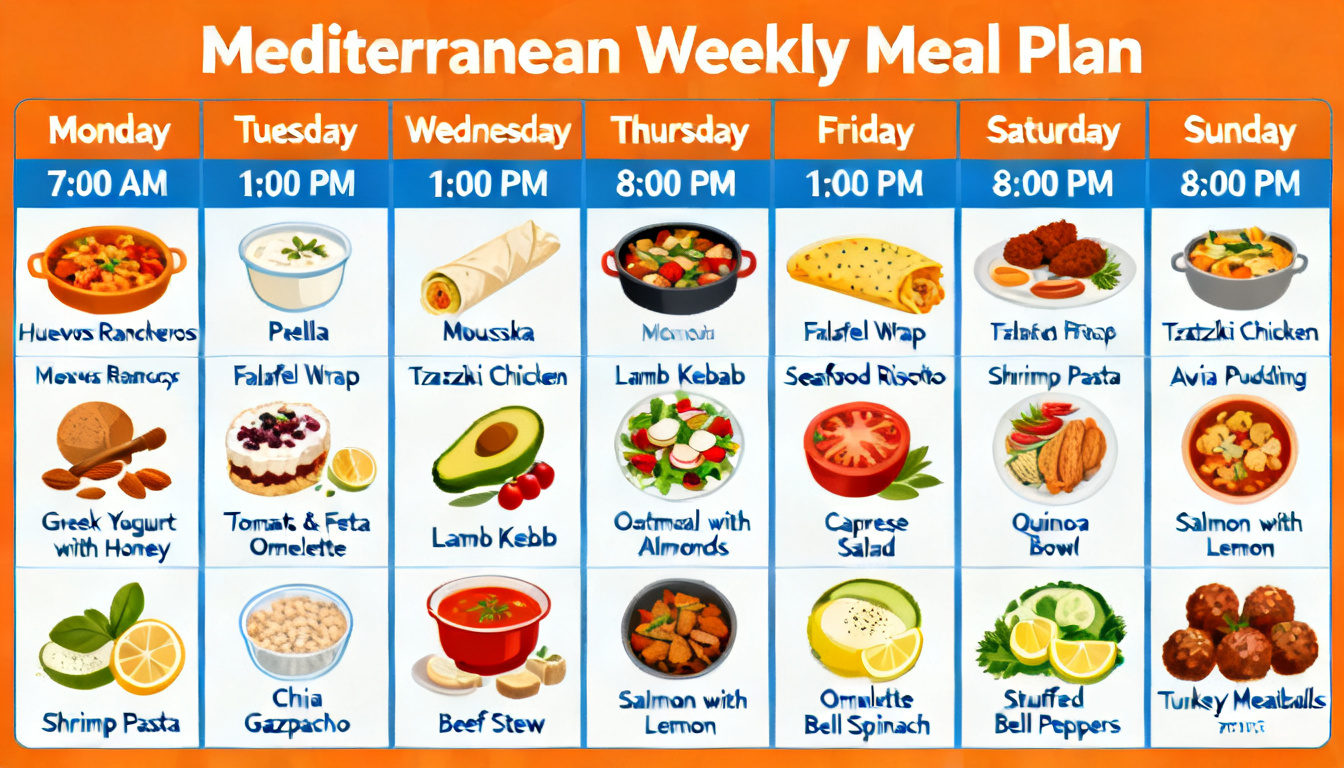
Sample Mediterranean Day for Weight Loss
A structured example helps translate theory into practice.
Breakfast
Greek yogurt with berries and chia seeds.
This combination provides protein, fiber, and healthy fats that support satiety throughout the morning.
Lunch
Mediterranean vegetable salad with chickpeas and olive oil dressing.
This meal provides fiber and plant-based protein while remaining light enough to avoid afternoon fatigue.
Dinner
Grilled fish with roasted vegetables and quinoa.
This dinner combines lean protein and whole grains, creating a satisfying meal without excess calories.
Snacks
Fresh fruit or a handful of nuts.
Simple snacks prevent hunger spikes and help maintain energy balance.
Portion Awareness Matters More Than Restriction
Mediterranean eating does not require eliminating foods, but portion awareness still matters.
Healthy foods can still contribute to weight gain if consumed excessively.
Helpful strategies include:
- Using smaller plates
- Serving moderate portions
- Avoiding second servings out of habit
- Paying attention to fullness signals
Learning to recognize hunger and satisfaction cues improves long-term weight control.
Lifestyle Habits That Improve Weight Loss Results
Food alone is not the only factor.
Mediterranean living also includes movement and daily habits that support metabolism.
These habits include:
- Walking regularly
- Staying physically active
- Cooking meals at home
- Sleeping consistently
- Reducing stress
These behaviors work together to support weight management.
Common Mistakes That Slow Weight Loss
Some people struggle with weight loss despite following Mediterranean recipes.
Often, the issue is not the diet itself but how it is applied.
Common mistakes include:
- Using too much olive oil
- Overeating nuts
- Eating large portions of bread
- Ignoring physical activity
- Consuming frequent desserts
Moderation remains essential.
Is the Mediterranean Diet Better Than Low-Carb Diets?
Some people compare Mediterranean eating with low-carb diets.
Both approaches can support weight loss, but Mediterranean-style eating tends to be easier to maintain long term.
It allows:
- Whole grains
- Legumes
- Fruit
These foods provide nutrients that support digestion and long-term health.
Sustainability often matters more than short-term speed.
Who Benefits Most From Mediterranean Weight Loss
This eating pattern works well for:
- People who dislike restrictive diets
- Individuals with busy schedules
- Families seeking healthier meals
- Adults looking for long-term weight control
It is particularly effective for those who want lasting habits rather than temporary solutions.
Signs the Mediterranean Diet Is Working
Weight is only one measurement.
Other early signs include:
- Feeling full longer
- Reduced cravings
- Better digestion
- Improved energy levels
- More consistent eating patterns
These indicators suggest positive progress even before significant weight changes occur.
Long-Term Weight Loss vs Short-Term Results
Crash diets often create rapid weight loss followed by regain.
Mediterranean-style weight loss focuses on gradual progress.
This slower pace helps:
- Maintain muscle mass
- Prevent metabolic slowdown
- Reduce rebound weight gain
Long-term consistency produces the most meaningful results.
Final Thoughts
The Mediterranean diet offers a realistic approach to weight loss that doesn't depend on strict rules or extreme restrictions. Instead, it builds habits that help regulate hunger, improve food choices, and create sustainable eating patterns.
Weight loss achieved through Mediterranean-style eating often feels less stressful and more manageable because meals remain enjoyable rather than restrictive.
Over time, this balance makes it easier to maintain results and continue improving overall health.
For a structured approach to meal planning, check out our 7-Day Mediterranean Diet Meal Plan.