Greek Recipes for Beginners
Your Complete Starter Guide to Greek Cooking
Learning to cook Greek food does not require a trip to Athens, a specialty grocery store, or years of practice. Greek home cooking is built on a short list of high-quality ingredients, simple techniques, and the instinct to taste as you go. It is one of the most forgiving cuisines for beginners because the flavors do most of the work before you even turn on the stove.
This guide is designed for someone who has never cooked a Greek dish. It covers the ingredients you need to buy, the equipment that matters, and three recipes arranged by difficulty so you can build confidence progressively. By the end of two weeks, you will have a working foundation in Greek cooking and the skills to explore the broader Greek recipes collection on your own.
The 8 Essential Ingredients
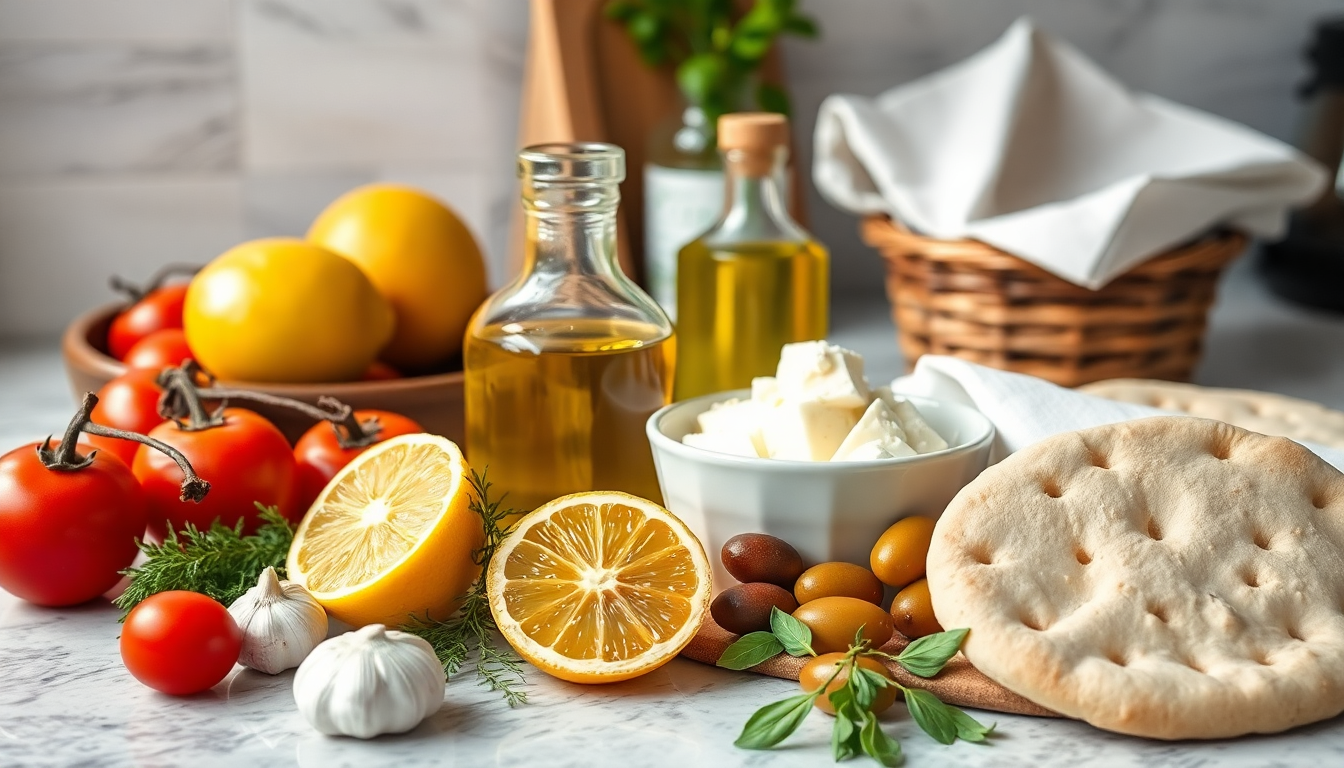
Greek cooking does not use many ingredients, but the quality of each one matters. These eight items cover roughly 80% of everyday Greek home cooking. If your pantry has these, you can make most dishes without a special grocery trip.
1. Extra Virgin Olive Oil
This is the single most important ingredient in Greek cooking. It is used for frying, sautéing, roasting, finishing, and dressing. Greek olive oil tends to have a peppery, slightly bitter finish, which is a sign of quality. You do not need the most expensive bottle, but avoid anything labeled "light" or "pure," which has been refined and stripped of flavor. A 500ml bottle of decent extra virgin olive oil should cost between $8 and $15.
2. Lemons
Greek cooking uses fresh lemon juice instead of vinegar as its primary acid. You will squeeze lemon over grilled meat, stir it into soups, whisk it into dressings, and drizzle it on finished dishes. Buy whole lemons, not bottled juice, which tastes flat. Keep 4 to 6 lemons in your refrigerator at all times.
3. Garlic
Used raw in marinades, sautéed as the base of sauces, and crushed into dips like tzatziki. A single head of garlic costs almost nothing and transforms every dish it touches. Fresh garlic only; the pre-minced jars add an unpleasant metallic taste.
4. Dried Oregano
This is the signature herb of Greek cooking, used far more generously than most non-Greek cooks expect. It is not a garnish; it is a primary seasoning. Rubbed Greek oregano, sold in the spice aisle, has a more intense flavor than Italian oregano. Use it on chicken, vegetables, salads, and potatoes.
5. Feta Cheese (in Brine)
Buy feta that comes in a block submerged in brine, not pre-crumbled in a plastic container. Brined feta is moister, tangier, and crumbles naturally into irregular pieces. It keeps for weeks in the refrigerator. Greek or Bulgarian feta made from sheep's milk tastes significantly better than cow's milk versions. Feta appears in salads, pastas, baked dishes, and as a finishing touch on almost everything.
6. Kalamata Olives
Dark purple, almond-shaped, and preserved in olive oil. They add briny depth to salads, pastas, and grain bowls. Buy them from a jar, not from the olive bar, which tends to be dry and flavorless. A jar keeps in the refrigerator for weeks after opening.
7. Canned Chickpeas and Lentils
Dried beans are traditional but require soaking and hours of cooking. Canned chickpeas and lentils are nutritionally identical and require only rinsing before use. They are the foundation of fast Greek meals: chickpea bowls, lentil soup, and bean salads all start from a can.
8. Greek Yogurt
Full-fat Greek yogurt is used in marinades (it tenderizes meat), in dips (tzatziki), as a sauce base, and as a finishing dollop on bowls and soups. Look for brands where the first ingredient is milk, not whey or milk solids. Thick, creamy yogurt with minimal additives is what you want.
Where to Find These Ingredients
All eight items are available at any standard American or European supermarket. Extra virgin olive oil, lemons, garlic, and Greek yogurt are in the regular aisles. Feta and Kalamata olives are in the cheese and olive sections respectively. Oregano is in the spice aisle. Canned chickpeas and lentils are in the canned goods section. No specialty stores needed.
Equipment You Actually Need
Greek home cooking does not require specialized equipment. If you own the following six items, you are fully equipped.
- A large skillet (10-12 inches): Cast iron is ideal because it retains heat for searing, but any heavy-bottomed skillet works. This is your primary cooking tool for chicken, vegetables, and sauces.
- A sheet pan: For roasting. Almost every Greek vegetable preparation and many chicken dishes use a single sheet pan in a hot oven.
- A large pot: For boiling pasta and making soup. A 5-quart pot covers most needs.
- A chef's knife: For chopping vegetables, slicing chicken, and mincing garlic. One good knife is better than a full set you never use.
- A cutting board: Any material works. Have two if possible: one for raw meat, one for vegetables.
- A citrus juicer: A handheld reamer or a simple press. You will be squeezing lemons constantly, and extracting maximum juice matters.
You do not need a food processor, stand mixer, grill, or any specialty gadget to start cooking Greek food. These can enhance your cooking later, but they are not requirements.
Your First 3 Recipes: Progressive Difficulty
These three recipes are arranged so each one teaches a new skill while building on the previous one. Start with Level 1 and work your way up.
Level 1: Greek Village Salad (Horiatiki)
Time: 10 minutes | Skills learned: Knife work, dressing, seasoning
This is the dish to make first because it teaches the foundation of Greek flavor without any cooking. You learn how to cut vegetables, how to dress a salad with olive oil and lemon, and how feta and oregano transform simple ingredients.
Ingredients: 3 ripe tomatoes, 1 cucumber, 1/2 red onion, kalamata olives, block of feta, extra virgin olive oil, dried oregano, salt.
Method: Cut tomatoes into irregular wedges. Slice cucumber into thick half-moons. Slice red onion thinly. Arrange everything on a plate (do not toss). Place a thick slab of feta on top. Scatter olives around. Drizzle generously with olive oil. Sprinkle oregano and salt over everything.
What you learn: Greek salads are not tossed; they are composed on the plate. The feta goes on top as a single piece, not crumbled throughout. The olive oil is not a light drizzle; it is generous. This salad teaches you the Greek instinct to layer flavors visually.
See more salad variations on the Greek recipes hub.
Level 2: Tzatziki
Time: 15 minutes + 30 minutes chilling | Skills learned: Draining, emulsifying, tasting and adjusting
Tzatziki teaches two essential Greek cooking skills: removing moisture from ingredients and building a sauce through tasting and adjusting. Both skills transfer to dozens of other recipes.
Ingredients: 1 cup full-fat Greek yogurt, 1/2 English cucumber, 2 cloves garlic, 1 tablespoon extra virgin olive oil, 1 tablespoon fresh lemon juice, 1 tablespoon fresh dill (or 1 teaspoon dried), salt.
Method: Grate the cucumber on a box grater. Wrap the shreds in a clean kitchen towel and squeeze firmly over the sink until no more liquid comes out. This step is non-negotiable; skipping it produces watery tzatziki. Combine the drained cucumber with yogurt, finely minced garlic, olive oil, lemon juice, dill, and salt. Stir well. Taste and adjust salt and lemon. Refrigerate for at least 30 minutes to let the flavors meld.
What you learn: Squeezing moisture out of ingredients is a fundamental Greek technique used for spinach in spanakopita, cucumber in tzatziki, and zucchini in batterakia. You also learn that Greek cooking relies on tasting and adjusting: add a squeeze of lemon, a pinch of salt, a drizzle of oil until the flavor balances.
Once you can make tzatziki, you have the sauce for souvlaki, gyros, grain bowls, and grilled vegetables.
Level 3: Chicken Souvlaki
Time: 20 minutes active + marinating | Skills learned: Marinating, high-heat searing, building a wrap
This is your first cooked Greek dish. It teaches the three most important techniques in the cuisine: marinating with lemon and oregano, searing at high heat for charred flavor, and assembling a wrap with balanced components.
Ingredients: 1 pound boneless chicken thighs, 3 tablespoons olive oil, juice of 1 lemon, 3 cloves garlic (minced), 1 tablespoon dried oregano, salt, pepper, pita bread, tomatoes, red onion.
Method: Combine olive oil, lemon juice, garlic, oregano, salt, and pepper in a bowl. Add chicken and toss to coat. Refrigerate for at least 30 minutes. Heat a skillet over medium-high heat until very hot. Cook chicken for 4-5 minutes per side until charred and cooked through. Warm pita. Slice chicken. Assemble: pita, chicken, sliced tomato, red onion, tzatziki (from Level 2). Roll and eat.
What you learn: Marinating is not optional in Greek cooking; it is how flavor gets into the protein. High-heat searing creates the charred, caramelized surface that defines Greek grilled food. Building a wrap teaches you about balance: protein, acid, crunch, and sauce in every bite.
For the complete souvlaki technique, see the full chicken souvlaki recipe.
Common Beginner Mistakes
Using Too Little Olive Oil
Greek cooking uses more olive oil than most other cuisines. A "generous drizzle" means 2-3 tablespoons, not a teaspoon. If a recipe says "drizzle with olive oil," do not be timid. The oil carries flavor, creates texture, and prevents sticking. Under-oiling is the most common reason beginners produce flat-tasting Greek food.
Overcooking Chicken
Greek chicken is best when juicy and slightly pink near the bone (for thighs). Pull chicken from heat when an instant-read thermometer reads 160°F. The residual heat will bring it to 165°F. Cutting into chicken to check doneness releases the juices you need inside the meat.
Using Bottled Lemon Juice
Bottled lemon juice tastes metallic and flat. Fresh lemons vary in acidity, which is actually a benefit: you control the brightness by squeezing more or less. It takes 30 seconds to juice a lemon. There is no reason to use bottled.
Skipping the Garlic
If a recipe calls for garlic, use the full amount listed. Beginners tend to reduce garlic because they fear it will be too strong. In Greek cooking, garlic is a primary flavor, not a background note. A dish with half the garlic will taste incomplete.
Not Tasting as You Go
Greek recipes are guidelines, not blueprints. The acidity of lemons varies. The saltiness of feta varies. The strength of oregano varies. Taste your food before serving and adjust: more lemon if it tastes flat, more salt if it tastes bland, more olive oil if it tastes dry. This instinct is what separates good Greek cooking from mechanical recipe-following.
Using Dried Herbs at the Wrong Time
Dried oregano and thyme should be added early in cooking so the heat releases their flavors. Fresh herbs like parsley, dill, and mint should be added at the end or as garnish to preserve their brightness. Adding dried herbs at the end produces a raw, dusty taste. Adding fresh herbs during cooking makes them wilt and lose their color.
Key Greek Cooking Concepts
These terms appear repeatedly across Greek recipes. Understanding them now will make every other recipe easier to follow.
Ladolemono
An emulsion of olive oil and lemon juice, seasoned with garlic and oregano. It is used as a marinade, a dressing, and a finishing sauce. Learn to make ladolemono and you can apply it to chicken, fish, vegetables, potatoes, and salads. See our Greek lemon chicken recipe for a full demonstration.
Avgolemono
A sauce made by tempering eggs with hot broth and lemon juice. It creates a creamy, silky texture without any dairy. Used in soups, over rice, and on stuffed vegetables. This is an intermediate technique, but understanding what it is helps you follow recipes that call for it.
Horiatiki
The traditional Greek village salad. Not tossed; composed on the plate. No lettuce. Feta on top as a slab. Understanding horiatiki teaches you the Greek approach to salads: simple, composed, and dressed generously.
Meze
Small plates served as appetizers or as a complete meal when several are shared. Greek meze culture is about variety: a few bites of this, a few bites of that. Tzatziki, olives, feta, grilled halloumi, and dolmades are all meze. Understanding meze helps you plan Greek meals as a spread rather than a single dish.
Your Two-Week Learning Plan
Week 1: Foundations
- Day 1-2: Buy the 8 essential ingredients. Make a Greek salad (Level 1). Practice cutting vegetables and dressing them with olive oil and oregano.
- Day 3-4: Make tzatziki (Level 2). Practice grating and squeezing cucumber, mincing garlic, and adjusting seasoning to taste.
- Day 5-6: Make chicken souvlaki (Level 3) with your tzatziki. Practice marinating, searing at high heat, and building a pita wrap.
- Day 7: Review. Cook your favorite of the three again. Notice the difference between the first and second time.
Week 2: Expansion
- Day 8-9: Make Greek lentil soup. Learn the one-pot method and the importance of finishing with vinegar.
- Day 10-11: Make Greek lemon chicken with potatoes. Learn roasting, ladolemono, and the sheet pan method.
- Day 12-13: Make Greek chicken pasta. Learn building a sauce in a skillet and using pasta water to adjust consistency.
- Day 14: Cook a full Greek dinner for friends or family: salad, main course, and a simple side. You now have the skills to improvise.
Frequently Asked Questions
What is the easiest Greek dish to make?
A Greek village salad (horiatiki): no cooking, 10 minutes, and only 6 ingredients. It teaches the core flavor profile of Greek cooking (olive oil, lemon, oregano, feta) without any heat. Start here.
Can I substitute ingredients if I cannot find Greek ones?
In most cases, yes. Any good extra virgin olive oil works. Any lemons work. Any feta works (though sheep's milk feta tastes better). The one ingredient that does not substitute well is dried Greek oregano, which has a distinctly different flavor from Italian oregano. If you can only buy one "real" Greek ingredient, make it the oregano.
Is Greek food healthy for beginners?
Greek cooking is one of the healthiest cuisines to learn because it relies on vegetables, legumes, olive oil, and lean proteins. It minimizes processed ingredients, refined sugar, and heavy cream. The Mediterranean diet, which is essentially everyday Greek eating, is consistently ranked among the healthiest dietary patterns in the world.
How much olive oil do Greek cooks actually use?
More than you think. A typical Greek recipe for four people uses 4 to 6 tablespoons of olive oil across the entire dish, including marinade, cooking, and finishing drizzle. Olive oil is not just a cooking medium in Greek food; it is a primary flavor ingredient.
What should I cook first after learning the basics?
Once you have mastered the three foundational recipes in this guide, move to quick Greek dinner ideas for weeknight cooking, then explore the broader easy Greek recipes collection organized by difficulty and meal type.
Do I need to learn Greek to cook Greek food?
No, but learning a few food terms helps you navigate authentic recipes and understand what you are making. The key terms above (ladolemono, avgolemono, horiatiki, meze) are the most useful starting points.
Conclusion
Greek cooking is one of the most accessible cuisines for beginners because it rewards quality ingredients over technical complexity. You do not need to master pastry dough, learn to make stock from scratch, or own specialized equipment. You need good olive oil, fresh lemons, dried oregano, and the willingness to taste as you go.
The three recipes in this guide teach you the core skills of Greek cooking: composing fresh ingredients into salads, building flavor through marinades and dressings, and searing protein at high heat for charred depth. Once these instincts are established, every other Greek recipe becomes easier to follow because they all share the same foundation.
For the complete collection of beginner-friendly recipes, visit the easy Greek recipes hub. For quick weeknight meals, see quick Greek dinner ideas. And when you are ready to explore a specific protein, the Greek chicken recipes collection offers a dozen options at every skill level.