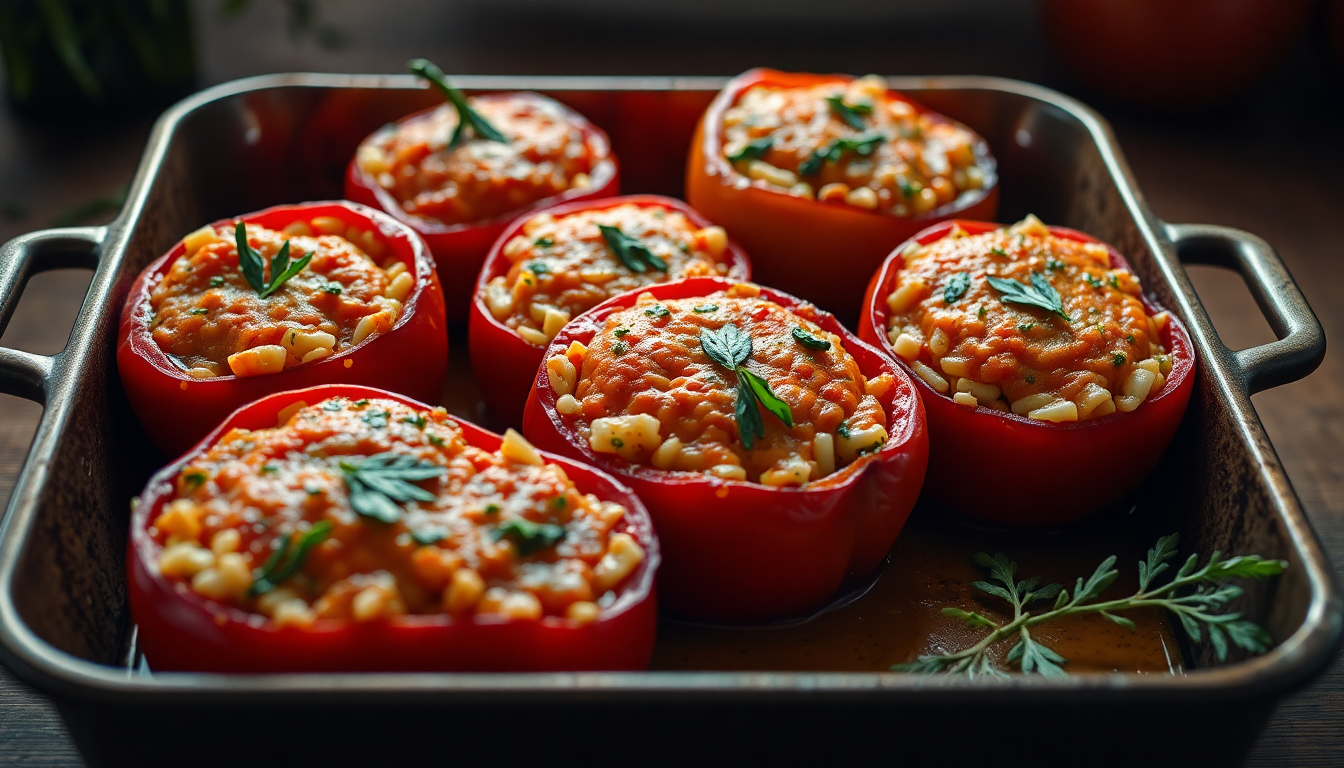
Vegetarian · Baked · Mediterranean
Greek Vegetarian Stuffed Peppers (Gemista)
Herbed rice, pine nuts, olives, and lemon — inside a roasted pepper
Gemista — Greek stuffed peppers — are one of the most naturally vegetarian dishes in the entire Mediterranean repertoire. While American stuffed peppers drown in ground beef and melted cheese, the Greek version starts from a completely different premise: the pepper is the star, and the filling exists to amplify it. Rice, fresh herbs, olive oil, pine nuts, and Kalamata olives create a filling so flavorful that it doesn't need a single animal product to feel complete. This is not a modern adaptation. Greek gemista have been made this way for centuries — born from Orthodox fasting traditions that demanded weeks of plant-based eating and from a landscape where vegetables, not meat, were the everyday center of the table. This guide covers everything: the choice of pepper, three filling variations, the potato-bed technique that defines the dish, and the serving temperature rules that most non-Greek cooks get wrong.
Why Gemista Taste Nothing Like American Stuffed Peppers
The comparison is inevitable, and the disappointment is predictable. If you expect Greek gemista to taste like the ground-beef-and-tomato-sauce version common in American home cooking, you will be confused. These are fundamentally different dishes that share a shape and nothing else.
American stuffed peppers treat the pepper as a container — a vessel to hold a meat-and-rice mixture seasoned like a taco filling. The pepper itself is incidental. Greek gemista reverse the relationship entirely. The pepper is the main ingredient. It roasts slowly, collapses slightly, concentrates its natural sweetness, and becomes the dominant flavor. The rice filling — fragrant with dill, mint, and lemon — is the supporting element, absorbing juices from the pepper as it cooks.
This distinction matters because it changes how you approach every step: the type of pepper you choose, how much filling you pack inside, the temperature you bake at, and — critically — the temperature at which you serve them. Get any of these wrong and you produce something that looks Greek but doesn't taste it.
Choosing the Right Peppers
Not all bell peppers work equally well for gemista. Size, shape, and wall thickness all affect the final result.
| Pepper Type | Shape | Best For |
|---|---|---|
| Blocky bell peppers (red, yellow) | Wide, stable base | Standing upright in the baking dish — the most practical choice |
| Long sweet peppers | Narrow, elongated | More elegant presentation, but prone to tipping — lean against each other |
| Poblano peppers | Flat base, moderate heat | Adds a mild spice dimension — not traditional but delicious |
| Small sweet peppers | Petit, compact | Meze-style individual portions — impressive on a platter |
The Cut: Top-Off vs Halved
The traditional Greek method cuts the top 1-2 cm off the pepper and uses the top as a lid during baking. This keeps the filling moist, creates a more elegant presentation, and preserves the pepper's natural cup shape. Do not cut too close to the stem — you want the top intact so it sits back on the pepper like a cap.
The halved-pepper method (cutting lengthwise and filling each half) is faster and works well for weeknight cooking, but produces a different result. The filling is exposed to direct heat, creating a slightly drier, more caramelized top surface. Both methods are valid. The top-off method is more traditional.
Three Filling Variations
The filling defines the character of the dish. Each variation here is authentically Greek and produces a distinct result.
Filling 1: Classic Rice and Herb (The Traditional)
This is the filling found in most Greek homes and tavernas. Medium-grain rice, fresh mint and parsley, pine nuts, Kalamata olives, and olive oil. The flavors are bright, herbal, and distinctly Mediterranean. This is the version to make first.
Ingredients (makes 10 peppers)
- 2 cups medium-grain rice
- 4 medium tomatoes, peeled and finely chopped (or 2 cans crushed tomatoes)
- 1 large onion, finely diced
- 4 cloves garlic, minced
- 1/2 cup fresh mint, chopped
- 1/2 cup fresh parsley, chopped
- 20 Kalamata olives, pitted and chopped
- 1/3 cup pine nuts, lightly toasted
- 1/3 cup golden raisins (optional — adds sweetness)
- 1/2 cup extra virgin olive oil, divided
- 1 teaspoon sugar, salt, pepper, chilli flakes
The critical technique: Combine all filling ingredients raw — do not cook the rice first. The rice cooks inside the pepper, absorbing the tomato juices, olive oil, and herb flavors as it hydrates. This is what creates the seamless integration between pepper and filling. Parboiling the rice beforehand produces a dry, disconnected filling.
Sauté the onion and garlic until soft before adding to the mixture — this eliminates raw onion bite while preserving the raw rice. Mix everything thoroughly. The filling should be moist but not swimming in liquid. If using fresh tomatoes, drain off excess juice first.
Filling 2: Rice with Sun-Dried Tomatoes and Capers
A Southern Greek variation that replaces fresh tomatoes with sun-dried tomatoes. The result is more concentrated, savory, and intensely flavored. Add 1/2 cup chopped sun-dried tomatoes (oil-packed, drained), 3 tablespoons capers, and omit the fresh tomatoes. The olive oil quantity may need to increase slightly since sun-dried tomatoes absorb moisture.
Filling 3: Orzo, Spinach, and Feta (The Modern Greek)
This version replaces rice with orzo pasta and adds spinach and feta cheese. It produces a lighter, tangier stuffed pepper that works particularly well as a summer main course. Cook 8 oz orzo to al dente, cool, then toss with 2 cups chopped fresh spinach, 1 cup crumbled feta, 1 cup chopped Kalamata olives, lemon zest and juice, olive oil, and oregano.
| Filling | Character | Vegan? | Best Season |
|---|---|---|---|
| Classic Rice & Herb | Herbal, bright, traditional | Yes | Summer through fall |
| Sun-Dried Tomato & Caper | Concentrated, savory, intense | Yes | Year-round |
| Orzo, Spinach & Feta | Tangy, fresh, modern | No | Spring and summer |
The Potato-Bed Method: What Separates Greek From Everyone Else
This is the technique that most non-Greek recipes omit and that defines authentic gemista. Potato wedges tucked between and around the peppers serve three purposes simultaneously:
1. Flavor absorption: The potatoes soak up the olive oil, tomato juices, and herb-infused liquid that collects in the pan. By the end of baking, they are the most flavorful element on the plate — crispy on the exposed surfaces, creamy where they contact the liquid.
2. Structural support: The wedges prop up the peppers, preventing them from tipping over during the long bake. This is why the "snug" arrangement matters — peppers packed tightly with potato wedges between them stay upright without any other intervention.
3. Complete meal: The potatoes transform stuffed peppers from a side dish into a full main course. One tray, everything cooked together, nothing wasted.
Potato-bed method
- Cut: 4 medium potatoes into thick wedges (not too thin — they'll burn before the peppers finish)
- Season: Toss with olive oil, salt, pepper, and dried oregano before adding to the pan
- Arrange: Tuck wedges between and around the peppers, standing some on their edges
- Liquid: Pour broth or water over everything — this creates the steam that cooks the rice
- Result: Crispy-edged, herb-infused potatoes that absorb everything the peppers release
Assembly and Baking: The Two-Stage Method
Gemista require a long, slow bake with a critical mid-point adjustment. This two-stage method ensures the rice cooks through without the tops burning.
Fill and arrange
Sprinkle sugar inside each pepper (this caramelizes and balances the acidity). Fill three-quarters full — the rice expands. Replace pepper tops. Arrange snugly in a deep baking dish with potato wedges between them.
Stage 1: covered (45 minutes)
Pour broth and olive oil over everything. Cover tightly with foil. The trapped steam cooks the rice and softens the peppers. Do not peek — every time you lift the foil, steam escapes and cooking time increases.
Stage 2: uncovered (45 minutes)
Remove foil. The pepper tops brown, the exposed rice crisps slightly, and the remaining liquid evaporates. The potatoes develop their golden edges during this stage.
Rest and serve
Cool to room temperature before serving. This is not optional — it's how gemista are meant to be eaten. The flavors settle, the rice firms up, and the olive oil integrates with everything.
Oven Temperature and Timing
375°F (190°C) for the full 90 minutes. Some recipes use higher heat for a shorter time, but the slow bake produces better results: the peppers collapse gently rather than char, the rice cooks evenly from the center outward, and the potatoes develop crispness gradually without burning. If your peppers are smaller, reduce by 10-15 minutes. Check at the 80-minute mark: the rice should be tender when tested with a fork, and the liquid should be mostly absorbed.
Common Problems and Fixes
❌ "The rice is still crunchy"
Causes: Not enough liquid in the pan, foil seal was loose, or peppers were overfilled (rice can't expand). Fix: Add 1/2 cup hot water, re-cover tightly with foil, and return to the oven for 15-20 minutes. For next time: fill peppers only three-quarters full and ensure broth reaches at least one-third up the peppers.
❌ "The peppers collapsed"
Causes: Peppers were too thin-walled, cut too close to the base when removing the top, or overfilled. Fix: Choose blocky, thick-walled peppers. Cut 1-2 cm from the top — not right at the stem. Fill three-quarters, not to the brim. Arrange snugly so they support each other.
❌ "They taste bland"
Causes: Underseasoned filling or missing the key aromatics. Fix: The filling should taste slightly overseasoned before going into the peppers — the rice and pepper will dilute it. Ensure you have mint, parsley, olives, and pine nuts. The sugar inside the pepper is not decorative — it caramelizes and balances the tomato acidity.
❌ "The bottom burned"
Causes: Not enough liquid, or oven too hot. Fix: Always add broth — the liquid protects the bottom layer while creating steam. Use a deep baking dish, not a shallow sheet pan. If the bottom is browning too fast, reduce temperature by 10°C and extend the baking time by 10 minutes.
Serving Temperature: The Rule Most People Break
This is the single most important serving detail, and most non-Greek cooks get it wrong. Gemista are served at room temperature or cold, not hot.
When hot from the oven, the peppers are soft and the rice is still setting. The flavors are individual and sharp — you taste the tomato, the mint, the olive oil as separate elements. After cooling for at least an hour (and ideally overnight in the refrigerator), the flavors meld into a cohesive whole. The olive oil solidifies slightly, coating each grain of rice. The herbs become more integrated. The sweetness of the roasted pepper deepens.
This is why gemista are considered ideal for meal prep and advance preparation. They genuinely improve with time. A tray made on Sunday afternoon peaks on Monday evening. Serve them on a platter with a generous drizzle of extra virgin olive oil, lemon wedges, and a simple green salad.
The Three Serving Temperatures
- Room temperature (traditional): Remove from the refrigerator 30-60 minutes before serving. This is the most authentic approach and produces the best flavor integration.
- Cold (summer meze): Serve directly from the refrigerator as part of a meze spread. Refreshing and intensely flavored. Ideal for hot weather.
- Warm (acceptable but not ideal): Reheat in a 300°F oven for 15-20 minutes, covered. The flavor is less integrated but still good. Never microwave — it makes the peppers rubbery and the rice tough.
Make-Ahead and Freezing
Refrigerator (Up to 4 Days)
Cool completely, then cover the baking dish tightly with plastic wrap or transfer peppers to an airtight container. The peppers keep their shape well during refrigeration. Serve cold or bring to room temperature before serving.
Freezer (Up to 3 Months)
Freeze baked peppers individually on a baking sheet until solid, then transfer to freezer bags. This prevents sticking and allows you to thaw individual portions. Reheat from frozen in a 300°F oven, covered with foil, for 25-30 minutes. The texture of the pepper softens slightly after freezing — still good, but not quite as pristine as fresh.
What to Serve With Greek Stuffed Peppers
Gemista work as a main course or as part of a larger spread. Here's how to build a complete Greek meal around them:
- Greek village salad (horiatiki) — the crisp freshness contrasts the soft, rich peppers.
- Dolmades — the lemony stuffed vine leaves complement the herbal rice filling.
- Fasolada — white bean soup as a starter before the stuffed pepper main course.
- Crusty bread and olive oil — for soaking up the pan juices. Essential.
- Vegan moussaka — for a plant-based feast featuring two stuffed/layered dishes.
Frequently Asked Questions
What are Greek stuffed peppers called? ▾
Should stuffed peppers be served hot or cold? ▾
Can Greek stuffed peppers be made vegan? ▾
Why are my stuffed peppers dry or the rice is undercooked? ▾
What potatoes go with stuffed peppers? ▾
Can I stuff peppers with raw rice? ▾
Conclusion
Greek vegetarian stuffed peppers are not a meatless compromise. They are one of the oldest, most complete expressions of Greek vegetable cooking — a dish where the pepper, the filling, and the cooking liquid become inseparable through a long, slow bake. The herbs infuse the rice. The rice absorbs the pepper's juices. The potatoes drink up everything else. The result is a tray of food that tastes like more than the sum of its parts.
The gemista tradition demonstrates something essential about vegetarian Greek recipes: they were never designed as substitutes. They stand alone, complete and satisfying, built on the same principles that define the cuisine's best meat dishes — quality ingredients, simple technique, patience, and the understanding that olive oil and lemon can carry a dish further than most cooks expect.
For the full collection of plant-based Greek dishes, visit the Greek vegetarian and vegan recipes hub. For more traditional Greek recipes, explore the complete collection organized by category.