Complete Guide
Greek Vegetable Dishes
From the crispy edges of briam to the silky sweetness of fasolakia — the recipes that make vegetables the star of the Greek table.
In Greece, vegetables are not a side dish waiting for the protein to arrive. They are the main event — the reason people sit at the table, the centerpiece of a Sunday lunch, the dish that disappears first at a family gathering. The phrase ladera describes an entire category of Greek cooking where vegetables are braised or roasted in olive oil until they reach a state of silky, concentrated flavor that no meat-based dish can replicate.
This guide goes beyond the usual "briam is Greek ratatouille" shortcuts you will find on English-language food blogs. We cover the full landscape of Greek vegetable dishes — the cooking techniques behind them, a complete briam recipe with three variations, five other essential dishes you need to know, and a vegetable glossary that tells you exactly which produce works in which preparation. Whether you are cooking for health, for flavor, or for the simple pleasure of eating well, this is where your search ends.
The Greek Vegetable Tradition: Why Vegetables Reign Supreme
Greek cuisine developed around what the land provided. Mountainous terrain, an arid climate, and centuries of Orthodox fasting traditions — which prohibited meat for nearly 200 days per year — forced cooks to extract maximum flavor from vegetables, legumes, and olive oil. The result is one of the world's most sophisticated vegetable-based culinary traditions.
Unlike French or Italian cooking, where vegetables often serve as supporting players, Greek vegetable dishes stand alone as complete meals. Briam feeds a family. Gemista is a main course. Fasolakia with crusty bread constitutes dinner. This is not health food by design — it is health food by tradition, and that distinction matters.
The ladera principle
Ladera dishes are defined by generous olive oil — not a tablespoon for sautéing, but enough to confit the vegetables during cooking. The oil becomes part of the dish, not just a cooking medium. If your briam looks dry, you have not used enough oil. This is the single most common mistake in Greek vegetable cooking.
The Six Pillars of Greek Vegetable Cooking
Every Greek vegetable dish falls into one of six technique categories. Understanding these gives you the framework to improvise with whatever vegetables are in season.
| Technique | Key Dishes | Oil Ratio | Best Vegetables |
|---|---|---|---|
| Roasting (sto fourno) | Briam, patzaria sto fourno | High — ¼ to ⅓ cup per dish | Potatoes, eggplant, zucchini, peppers |
| Braising (kokkinisto) | Fasolakia, bamies, hortochontorizo | Medium — 3-4 tablespoons | Green beans, okra, leeks, chard |
| Stuffing (gemista) | Gemista, dolmadakia, papoutsakia | Medium — poured over stuffed vegetables | Tomatoes, peppers, zucchini, eggplant |
| Boiling (vrasti/achtsi) | Horta, molocha, spanakorizo | Low cooking, high finishing oil | Wild greens, dandelion, chicory, spinach |
| Frying (tiganito) | Tomatokeftedes, melitzanokeftedes | High — shallow or deep fry | Tomatoes, eggplant, zucchini |
| Baking with béchamel (me pastitsio) | Papoutsakia, moussaka, pastitsio | Low oil, béchamel provides richness | Eggplant, potatoes |
Briam — The Complete Recipe
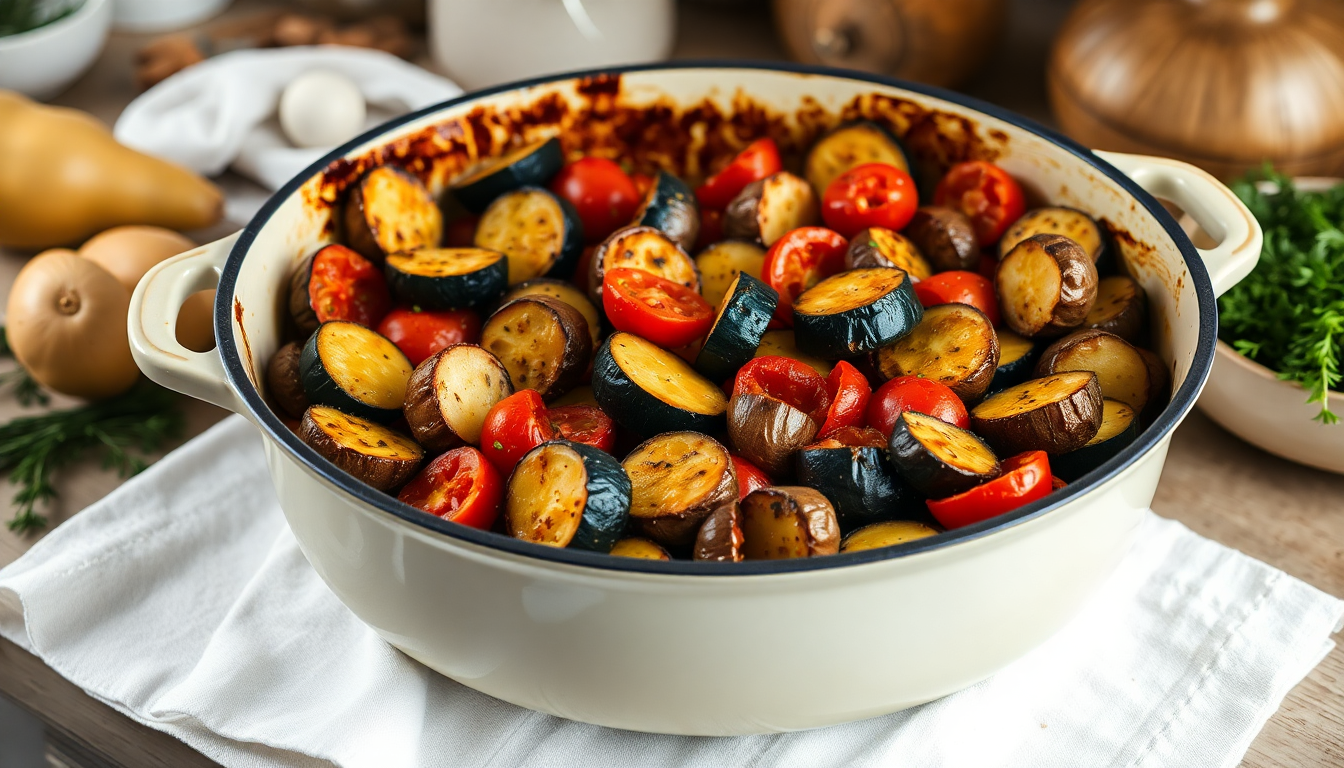
Briam is the dish that best represents the soul of Greek vegetable cooking. Built from five or six humble vegetables, layered in a baking dish, anointed with olive oil, and roasted until the edges crisp while the centers turn silky — it transforms simple produce into something extraordinary. There are as many versions of briam as there are Greek grandmothers, but the principle remains constant: quality vegetables, generous oil, patience.
Ingredients (6 servings)
- 3 medium zucchini — sliced ½ cm thick on a slight diagonal
- 2 medium eggplants — sliced ½ cm thick, salted and drained 20 minutes (optional — see note below)
- 4 large potatoes — peeled, sliced ½ cm thick
- 3 large ripe tomatoes — sliced ½ cm thick (or 1 can whole peeled, drained)
- 2 green bell peppers — sliced into rings
- 1 large red onion — thinly sliced
- 6 cloves garlic — thinly sliced
- 1 cup (240 ml) extra virgin olive oil — yes, a full cup; this is not a typo
- ¼ cup flat-leaf parsley — chopped
- 1 tablespoon dried oregano
- 1 teaspoon sweet paprika
- Salt and freshly ground black pepper
- 1 teaspoon sugar (optional — balances acidity from tomatoes)
Method
1. Preheat and prep. Set oven to 375°F (190°C). Pour 2 tablespoons of olive oil into a large baking dish (approximately 9×13 inches or similar) and tilt to coat the bottom. Slice all vegetables to uniform ½ cm thickness. Uniformity matters more than precision — if slices vary wildly, some pieces will be mushy while others remain raw.
2. Layer strategically. Place potato slices on the bottom — they take the longest to cook and benefit from direct contact with the oiled pan. Layer eggplant over potatoes, then zucchini, then scatter peppers and onion rings. Tuck garlic slices between layers so they roast without burning on the surface.
3. Top and anoint. Arrange tomato slices across the top in an overlapping pattern. Pour remaining olive oil evenly across the entire surface — do not drizzle in one spot. Sprinkle oregano, paprika, parsley, salt, pepper, and optional sugar across the top.
4. Steam first, roast second. Cover the dish tightly with parchment paper directly on the surface (to prevent sticking), then seal with aluminum foil. Bake covered for 45 minutes. This initial steam softens the potatoes and melds the flavors.
5. Caramelize. Remove both coverings. Increase oven to 400°F (200°C). Return the dish uncovered and roast 25-30 minutes until the edges are golden-brown and slightly charred, and the olive oil is sizzling around the vegetables.
6. Rest. Let briam rest at least 10 minutes before serving. Ideally, serve at room temperature — the flavors continue developing as the dish cools. Briam is one of the rare dishes that tastes better the next day.
On salting eggplant
Traditional recipes salt eggplant slices and let them drain for 30 minutes to remove bitterness. Modern eggplant varieties are bred to be less bitter, so this step is now optional. However, salting does reduce oil absorption and improve texture — the eggplant holds its shape better during roasting. If your eggplant is large with visible seeds, salt it. If it is small and firm, skip it.
Three Briam Variations
Once you master the basic method, briam becomes a canvas. These three variations are all traditional, each reflecting a different regional or seasonal approach.
| Variation | Key Changes | Best Season | Protein per Serving |
|---|---|---|---|
| Classic village briam | All five vegetables, no cheese. Maximum olive oil. Baked in clay pot. | Summer — August/September when all vegetables peak simultaneously | 5g |
| Cheese-topped briam (me tyri) | Add 150g crumbled feta or grated graviera in the last 15 minutes of baking. | Year-round — the cheese makes it heartier for cooler months | 11g |
| Potato-focused briam (patatato) | Double the potatoes, omit eggplant. Simpler, starchier, very common in Crete. | Winter — when potatoes are fresh and eggplant is out of season | 4g |
Five Other Classic Greek Vegetable Dishes
Briam may be the most famous, but Greek cuisine's vegetable repertoire extends far beyond roasted pans. These five dishes represent the other essential techniques every cook should know.
1. Gemista — Stuffed Tomatoes and Peppers
Tomatoes and bell peppers hollowed out and filled with a mixture of rice, fresh herbs (mint and dill are essential), pine nuts, and sometimes currants. Baked in a pool of olive oil with potatoes tucked around the base. The stuffed shells become vessels of concentrated flavor while the surrounding potatoes absorb the tomato-herb oil. Our complete gemista guide covers three filling variations.
2. Fasolakia — Braised Green Beans in Tomato
Fresh green beans simmered slowly in a tomato sauce enriched with olive oil, onion, and garlic until they turn silky and the sauce reduces to a glossy coating. The Greek approach differs from Italian green bean preparations: lower heat, longer cooking, more oil. The beans should be tender enough to cut with a fork but not mushy. Served at room temperature with bread and feta.
3. Horta — Boiled Wild Greens with Lemon
The simplest and perhaps most ancient Greek vegetable dish. Wild greens — dandelion, chicory, amaranth, or a seasonal mix — boiled until tender, drained, dressed with olive oil and fresh lemon juice. In Greece, horta is the default vegetable side, ordered at nearly every taverna. The combination of bitter greens, bright lemon, and fruity olive oil is elemental Greek cooking at its most refined. See our healthy Greek recipes for more on the nutritional benefits of this preparation.
4. Spanakorizo — Spinach Rice
Fresh spinach cooked with dill, scallions, and short-grain rice in olive oil with lemon juice. The rice absorbs the spinach liquid and turns a vivid green. It can be served soupy or dry, depending on regional preference. High in iron, folate, and fiber — this dish is a nutritional powerhouse that tastes like comfort food.
5. Melitzanes Papoutsakia — Eggplant "Little Shoes"
Eggplant halves topped with a simple tomato-meat sauce and crowned with béchamel, then baked until golden. The name "papoutsakia" (little shoes) comes from the shape of the eggplant base. This dish bridges the vegetable and béchamel traditions — the same béchamel technique used in pastitsio and moussaka, applied to a single-serving format. Vegetarian versions skip the meat and add extra eggplant to the sauce.
Vegetable Pairing Glossary
Not every vegetable works in every Greek preparation. This glossary matches produce to technique so you can build your own combinations with confidence.
| Vegetable | Best Technique | Pairs With | Notes |
|---|---|---|---|
| Zucchini | Roasting, stuffing, frying | Tomatoes, onion, mint, feta | Choose small, firm ones — large zucchini are watery and seedy |
| Eggplant | Roasting, frying, baking with béchamel | Tomatoes, garlic, olive oil, basil | Absorbs enormous amounts of oil — this is a feature, not a bug |
| Green beans | Braising | Tomatoes, onion, olive oil, lemon | Must be fresh, not frozen — texture difference is significant |
| Potatoes | Roasting, braising, baking as beds | Lemon, oregano, garlic, olive oil | The workhorse — absorbs flavors from every dish they accompany |
| Tomatoes | Raw (salads), roasting (top layer), braising (sauce base) | Olive oil, oregano, feta, cucumber | Use only ripe, in-season tomatoes raw — out-of-season are mealy |
| Wild greens | Boiling | Lemon, olive oil, garlic | Bitter is better — do not overboil trying to remove bitterness |
| Okra | Braising, stewing | Tomatoes, onion, lemon, dill | Do not stir during cooking — stirring releases mucilage (slime) |
Nutrition-per-Plate Analysis
One reason Greek vegetable dishes deserve attention beyond flavor is their nutritional density. Here is a per-serving breakdown of the six main dishes covered in this guide.
| Dish | Calories | Fiber | Key Nutrients | Vegan? |
|---|---|---|---|---|
| Briam (classic) | 290 | 8g | Vitamin C, potassium, lycopene | ✅ |
| Briam (with feta) | 340 | 7g | Calcium, protein, vitamin C | ❌ |
| Gemista (rice filling) | 310 | 5g | Vitamin A, folate, iron | ✅ |
| Fasolakia | 220 | 6g | Vitamin K, vitamin C, fiber | ✅ |
| Horta | 140 | 4g | Iron, vitamin A, vitamin K, calcium | ✅ |
| Spanakorizo | 250 | 5g | Iron, folate, magnesium | ✅ |
The pattern is clear: Greek vegetable dishes deliver substantial nutrition at moderate calorie levels. Four of the six are naturally vegan. All are high in fiber. The primary calorie source is olive oil — monounsaturated fat associated with cardiovascular protection — rather than saturated fat or refined carbohydrates.
Troubleshooting
Briam is dry and the vegetables are not caramelized
Fix: Add more oil before the uncovered roasting stage. You can also drizzle additional oil over the top when you remove the foil.
Potatoes are raw while the top is burnt
Fix: Par-boil potato slices for 5 minutes before layering. This gives them a head start and ensures they finish at the same time as the softer vegetables above.
Fasolakia turned to mush
Fix: Use fresh beans only. Cook covered for 20 minutes, then uncovered for 15 — check tenderness with a fork. Beans should yield to pressure but not fall apart. Remove from heat immediately once done.
Horta is too bitter to eat
Fix: Boil greens in plenty of salted water for 10 minutes, drain, then squeeze out excess water. Start with younger, smaller leaves which are less bitter. The lemon juice added at serving should counterbalance remaining bitterness.
Gemista filling is undercooked
Fix: Pre-soak rice in hot water for 10 minutes before filling. Ensure the baking dish has 1 cup of water or broth in the bottom to create steam. Cover tightly with foil for the first 40 minutes of baking. Total baking time should be 60-70 minutes.
Make-Ahead & Freezing Guide
Greek vegetable dishes are ideal for meal prep. Most improve with time as the flavors meld and the olive oil penetrates the vegetables.
| Dish | Fridge Life | Freezer Friendly? | Best Reheat Method |
|---|---|---|---|
| Briam | 4-5 days | Yes — up to 3 months | Oven 350°F for 15 min — never microwave |
| Gemista | 4 days | Yes — up to 3 months | Oven 325°F for 20 min with splash of water |
| Fasolakia | 5 days | Yes — up to 2 months | Stovetop over low heat, stirring gently |
| Horta | 3 days | No — texture degrades significantly | Serve cold or at room temp with fresh lemon |
| Spanakorizo | 4 days | Yes — up to 2 months | Microwave with splash of water (this one tolerates it) |
🍽️ Serving temperature matters
Unlike most Western cuisines where hot food is the default, many Greek vegetable dishes are traditionally served at room temperature or only slightly warm. Briam, fasolakia, gemista, and horta all fall into this category. This is not laziness — it is intentional. Room temperature allows the olive oil to coat the palate more effectively and lets flavors express more fully. Do not assume your dish failed because you served it warm instead of hot.
Frequently Asked Questions
What is briam?
What are the most popular Greek vegetable dishes?
Is briam healthy?
Can I make briam ahead of time?
What does ladera mean in Greek cooking?
Can I use dried herbs instead of fresh in Greek vegetable dishes?
Conclusion
Greek vegetable dishes are not a dietary compromise — they are a culinary choice made by a culture that has spent centuries perfecting how to cook with the sun's bounty and the earth's oil. From the golden edges of a well-roasted briam to the bright acidity of a fasolakia served at room temperature, these dishes deliver satisfaction that transcends their humble ingredients.
The key insight from this guide is not any single recipe but the underlying system: six cooking techniques matched to specific vegetables, united by olive oil and seasoning. Once you understand this framework, you can improvise endlessly — swap eggplant for pumpkin in briam, replace green beans with okra in a braise, stuff peppers instead of tomatoes. The tradition is flexible; the principles are not.
Start with the briam recipe. It is the most forgiving, the most scalable, and the dish that best captures what Greek vegetable cooking is about: taking simple produce, treating it with respect, and letting the oven do the rest.