Complete Guide
Greek Yogurt Recipes
From homemade strained yogurt to tzatziki, tangy marinades, and honey-drizzled desserts — everything you need to cook with yogurt the Greek way.
Greek yogurt is not a health-food trend — it is a 4,000-year-old preservation technique that happens to produce one of the most versatile ingredients in Mediterranean cooking. Thick enough to stand a spoon in, tangy enough to balance rich lamb, mild enough to carry honey and walnuts for dessert — this single ingredient replaces sour cream, heavy cream, buttermilk, and mayonnaise across dozens of traditional Greek recipes.
English-language food sites treat Greek yogurt as either a snack or a smoothie ingredient. That misses the point entirely. In Greece, yogurt appears in sauces (tzatziki), marinades (souvlaki), soups (avgolemono thickened with yogurt instead of egg), pastries (galaktoboureko filling), and as a condiment alongside nearly every grilled meat. This guide covers the full range — from making your own yogurt at home to nine distinct recipe categories, each with detailed technique.
Why Yogurt Matters in Greek Cooking
Yogurt's importance in Greek cuisine extends beyond nutrition. It serves three functional roles that no other single ingredient can replicate simultaneously:
As a Tenderizer
The lactic acid in yogurt breaks down protein fibers in meat without the aggressive acidity of citrus or vinegar. Marinating chicken, lamb, or pork in yogurt for 4-12 hours produces meat that is noticeably more tender with a caramelized exterior when grilled. The dairy sugars also promote Maillard browning — why yogurt-marinated souvlaki develops that signature golden crust.
As a Cooling Agent
Greek cuisine uses yogurt to counterbalance heat and acidity. A spoonful of cold yogurt beside spicy kokkinisto stew, dolloped onto a hot pastitsio, or stirred into avgolemono soup creates temperature and flavor contrast. Tzatziki — yogurt with cucumber, garlic, and dill — exists specifically to cool grilled meats and fried foods.
As a Textural Foundation
Strained yogurt's thickness allows it to bind ingredients without diluting them. In dips, it holds garlic and herbs in suspension. In baked goods, it provides moisture and acidity that activates baking soda for rise. In frozen desserts, its fat content prevents ice crystal formation. This textural versatility explains why yogurt appears across sweet and savory applications alike.
Homemade Greek Yogurt — The Full Recipe
Store-bought Greek yogurt is convenient but expensive per gram, and brands vary wildly in quality — some add thickeners (gelatin, pectin, corn starch) to mimic the strained texture without actual straining. Making your own gives you control over thickness, tang, and fat content at a fraction of the cost.
What You Need
- 8 cups (2 liters) whole milk — whole milk produces the thickest, creamiest result. Skim milk works but yields a thinner, more tart yogurt.
- 3 tablespoons plain yogurt with live active cultures — this is your starter. Use the best quality plain yogurt you can find (ingredients: milk, live cultures — nothing else). Or use the last 3 tablespoons of your previous homemade batch.
- Heavy-bottomed pot — thin pots scorch milk easily.
- Kitchen thermometer — non-negotiable. Temperature precision determines success or failure.
- Cheesecloth or muslin — for straining. A clean cotton t-shirt works in a pinch.
- Colander and bowl — for the straining setup.
Step-by-Step Method
1. Heat the milk to 180°F (82°C). Pour milk into a heavy-bottomed pot over medium heat. Stir occasionally with a wooden spoon to prevent a skin from forming on the bottom. This step denatures the whey proteins (specifically beta-lactoglobulin), which allows them to form a tighter gel network during culturing. Skipping this step produces thin, fragile yogurt.
2. Cool to 110°F (43°C). Remove pot from heat. To speed cooling, place the pot in a sink filled with cold water and stir gently. This takes approximately 15 minutes. Do not add starter to milk above 115°F — the heat will kill the live cultures.
3. Temper and inoculate. Ladle about 1 cup of warm milk into a separate bowl. Whisk in the 3 tablespoons of yogurt starter until completely smooth — this prevents clumping. Pour the tempered mixture back into the pot and stir gently with slow, broad strokes. Avoid vigorous stirring, which introduces air and disrupts the developing culture.
4. Incubate for 6-8 hours. Cover the pot with a lid, then wrap in a thick towel or blanket. Place in an oven with only the light turned on (no heat) — the light bulb generates just enough warmth to maintain 100-110°F. Alternatively, use the Instant Pot's yogurt function. The longer the incubation, the tangier the yogurt. Six hours produces mild yogurt; eight hours produces noticeable tang.
5. Check the set. After incubation, the yogurt should be firmly set — it will jiggle like soft pudding when you tap the pot. If it is still liquid, incubate another 1-2 hours. Once set, refrigerate at least 4 hours to halt culturing and firm the texture.
6. Strain for Greek yogurt. Line a colander with two layers of cheesecloth. Set the colander over a large bowl. Pour in the chilled yogurt. Cover loosely and refrigerate. Strain 2-4 hours for thick Greek yogurt — the longer you strain, the thicker the result. Reserve the whey (the yellowish liquid) for baking, smoothies, or fermenting vegetables.
7. Store and reserve starter. Transfer strained yogurt to clean jars. Immediately set aside 3 tablespoons in a separate labeled container — this is your starter for the next batch. Homemade yogurt can be propagated indefinitely from its own stock, though cultures weaken after 5-6 generations and should be refreshed.
⏱ Time breakdown
Active hands-on time is roughly 25 minutes (heating, cooling, tempering, setting up incubation). The rest is waiting — 6-8 hours incubating and 2-4 hours straining. Start yogurt in the evening and strain it the next morning for a seamless overnight process.
Thickening Methods Compared
Not all thick yogurt is Greek yogurt. The market is full of products thickened by means other than straining. Understanding the difference helps you choose — or make — the right product for each recipe.
| Method | How It Works | Texture | Protein | Best For |
|---|---|---|---|---|
| Straining (traditional) | Whey drains through cheesecloth, concentrating solids | Dense, creamy, slightly grainy | 20-24g per cup | Tzatziki, dips, marinades, eating plain |
| Milk powder addition | Non-fat dry milk added before culturing increases solids | Smooth, uniform, slightly chalky | 18-22g per cup | Homemade yogurt when you want less straining time |
| Gelatin or pectin | Thickener added after culturing — commercial shortcut | Uniform, glossy, can be rubbery | 15-17g per cup | Not recommended — masks poor-quality yogurt |
| Corn starch or tapioca | Starch thickens the whey, mimicking strained texture | Smooth but starchy, can be gummy | 12-15g per cup | Avoid for cooking — starch breaks down when heated |
🚫 Read the label
If the ingredients list includes anything beyond milk and live active cultures (gelatin, pectin, corn starch, milk protein concentrate), the manufacturer is compensating for not straining the yogurt properly. These additives do not improve flavor or nutrition — they reduce production cost. Buy strained yogurt with two ingredients or strain your own.
Yogurt Types: Fat Content & When to Use Each
Fat content dramatically changes yogurt's behavior in cooking. Choosing the wrong fat level for a recipe produces results that range from disappointing to inedible.
| Type | Fat % | Protein (per cup) | Best Applications | Do NOT Use For |
|---|---|---|---|---|
| Full-fat (10%) | 10% | 22g | Eating plain, tzatziki, frozen yogurt, desserts | Strict low-fat diets (obviously) |
| Whole milk (5%) | 5% | 20g | All-purpose — sauces, marinades, dips, baking | Nothing — the most versatile option |
| Low-fat (2%) | 2% | 19g | Smoothies, baking, marinades (short marination only) | Tzatziki (too thin), frozen yogurt (icy) |
| Non-fat (0%) | 0% | 22g | Protein shakes, smoothies, as buttermilk substitute in baking | Dips, sauces, marinades, anything where creaminess matters |
The rule: If the yogurt is visible in the final dish (dips, toppings, desserts), use full-fat or whole milk. If it is a background ingredient (marinades, baking), low-fat works. Non-fat yogurt has no culinary role beyond smoothies and protein supplementation.
Five Savory Yogurt Recipes
1. Classic Tzatziki
The most iconic Greek yogurt recipe — and the one most people get wrong. Tzatziki requires three things: thick yogurt, drained cucumber, and restraint with the garlic.
Ingredients:
- 2 cups strained Greek yogurt (full-fat)
- 1 English cucumber, grated and squeezed dry in a towel
- 2-3 cloves garlic, finely grated on a microplane (not minced — chunks are harsh)
- 2 tablespoons extra virgin olive oil
- 1 tablespoon white wine vinegar
- 1 tablespoon fresh dill, chopped
- Salt and white pepper
Method:
Grate cucumber on the large holes of a box grater. Place in a clean kitchen towel and squeeze out as much liquid as possible — this step is critical. Wet cucumber makes watery tzatziki.
Combine yogurt, squeezed cucumber, garlic, olive oil, vinegar, dill, salt, and white pepper. Stir gently — do not whisk. Refrigerate at least 1 hour before serving. Tzatziki improves significantly after resting as the garlic infuses the yogurt.
Serve with warm pita, grilled meats, fried vegetables, or as a condiment alongside homemade Greek pita bread.
🥒 The cucumber problem
Cucumbers are 96% water. If you skip squeezing, that water releases into the yogurt over the next few hours, creating a thin, broken sauce. Squeeze the grated cucumber until no more liquid comes out. You will be surprised how much there is — typically 2-3 tablespoons per cucumber.
2. Yogurt-Marinated Lamb Souvlaki
This marinade is the difference between good souvlaki and great souvlaki. Yogurt tenderizes lamb shoulder while adding a subtle tang that balances the meat's richness.
Ingredients:
- 2 lbs (900g) lamb shoulder, cut into 1.5-inch cubes
- 1 cup whole-milk Greek yogurt
- 3 cloves garlic, grated
- Zest and juice of 1 lemon
- 2 tablespoons olive oil
- 1 tablespoon dried oregano
- 1 teaspoon ground cumin
- 1 teaspoon smoked paprika
- Salt and black pepper
Method:
Combine all marinade ingredients. Toss lamb cubes to coat evenly. Marinate in refrigerator 4-12 hours (no longer than 24 hours — the acid eventually turns the surface mushy). Thread onto metal skewers, shaking off excess marinade. Grill over high heat 3-4 minutes per side until charred and cooked to medium. Serve with tzatziki and warm pita. Full technique details in our gyro recipe guide.
3. Cacık — Turkish-Greek Yogurt and Herb Soup
A cold yogurt soup served across the Eastern Mediterranean — lighter than tzatziki, thinner in consistency, eaten with a spoon as a first course on hot days.
Ingredients:
- 2 cups Greek yogurt, thinned with 1 cup cold water
- 1 small cucumber, finely diced
- 2 tablespoons fresh mint, chopped
- 1 tablespoon fresh dill, chopped
- 1 clove garlic, grated
- 2 tablespoons olive oil
- 1 tablespoon white wine vinegar
- Salt
- Ice cubes for serving
Method:
Whisk yogurt and water until smooth. Stir in cucumber, herbs, garlic, olive oil, vinegar, and salt. Chill thoroughly. Serve in bowls with ice cubes floating on top and a drizzle of olive oil. The consistency should be drinkable, not spoonable.
4. Yogurt and Garlic Sauce for Grilled Fish
A simpler alternative to tzatziki — no cucumber, just yogurt, garlic, lemon, and herbs. This sauce lets the fish be the star while adding creamy contrast.
Ingredients:
- 1 cup strained Greek yogurt
- 2 cloves garlic, grated
- Zest and juice of 1 lemon
- 2 tablespoons fresh parsley, chopped
- 1 tablespoon extra virgin olive oil
- Pinch of cayenne pepper
- Salt
Method:
Stir everything together. Rest 20 minutes for flavors to meld. Serve alongside grilled sea bass, swordfish, or shrimp. Also excellent drizzled over roasted vegetables — especially those from our Greek vegetable dishes guide.
5. Yogurt-Marinated Chicken (Kotopoulo Skaras)
Whole chicken pieces marinated overnight in spiced yogurt, then grilled until the exterior caramelizes into a golden crust. The yogurt marinade keeps the meat juicy even if slightly overcooked.
Ingredients:
- 3 lbs (1.4 kg) bone-in chicken thighs and drumsticks
- 1 cup whole-milk Greek yogurt
- 4 cloves garlic, grated
- 2 tablespoons lemon juice
- 1 tablespoon smoked paprika
- 1 teaspoon ground turmeric
- 1 teaspoon dried thyme
- ½ teaspoon cayenne pepper
- 2 tablespoons olive oil
- Salt and black pepper
Method:
Combine all marinade ingredients. Coat chicken pieces thoroughly. Cover and refrigerate 8-12 hours. Bring to room temperature 30 minutes before grilling. Grill over medium heat, turning every 5-6 minutes, until internal temperature reaches 165°F (74°C) and the yogurt coating is deeply golden. Total grilling time: 25-30 minutes depending on piece size.
Four Sweet Yogurt Recipes
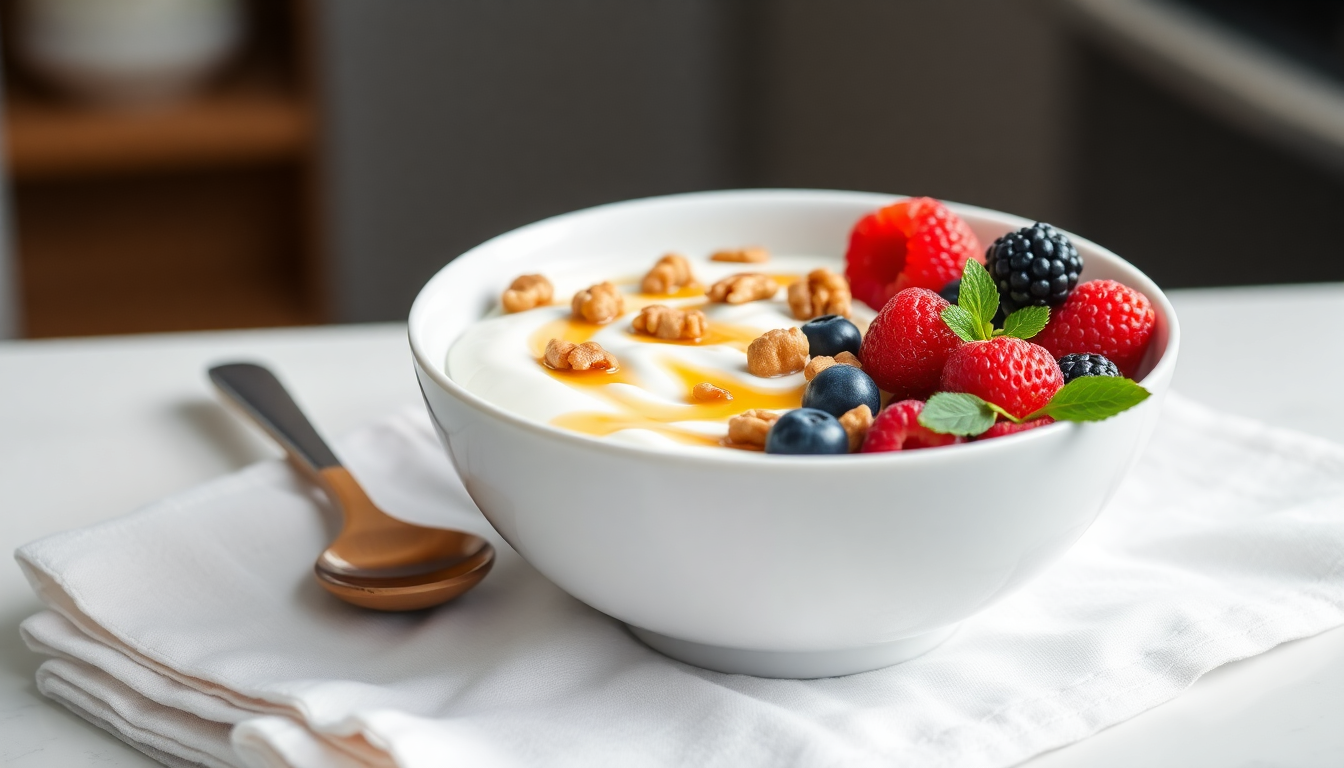
1. Yogurt with Honey, Walnuts, and Cinnamon
The most traditional Greek dessert — served at every taverna, every hotel breakfast, and in every Greek grandmother's kitchen. Deceptively simple; the quality of each ingredient matters enormously.
Ingredients:
- 1 cup full-fat strained Greek yogurt
- 2-3 tablespoons Greek thyme honey (or any floral honey)
- ¼ cup walnuts, lightly toasted and roughly chopped
- Pinch of ground cinnamon
- Optional: fresh figs, pomegranate seeds, or sour cherries in syrup
Method:
Spoon yogurt into a bowl. Drizzle honey generously — do not be shy. Scatter walnuts on top. Dust with cinnamon. Serve immediately.
🍯 Honey choice matters
Greek thyme honey has a distinctive herbal, slightly resinous flavor that defines this dish. If unavailable, use any raw, unfiltered honey — avoid commercial honey that has been ultra-filtered and heated, as it lacks the floral complexity this simple dish demands. Manuka honey is too medicinal. Acacia honey is too light. Wildflower or chestnut honey are good substitutes.
2. Greek Yogurt Panna Cotta
A lighter alternative to traditional cream-based panna cotta that uses yogurt's natural tang to balance the sweetness.
Ingredients:
- 2 cups full-fat Greek yogurt
- 1 cup heavy cream
- ½ cup sugar
- 2 teaspoons unflavored gelatin
- 3 tablespoons cold water
- 1 teaspoon vanilla extract
- Zest of 1 lemon
- Fresh berries and honey for serving
Method:
Bloom gelatin in cold water for 5 minutes. Heat cream and sugar in a saucepan until sugar dissolves and mixture just simmers. Remove from heat. Stir in bloomed gelatin until dissolved. Let cool to room temperature. Whisk in yogurt, vanilla, and lemon zest. Pour into 6 ramekins or glasses. Refrigerate at least 4 hours until set. Serve with fresh berries and a drizzle of honey.
3. Yogurt Cake (Yiaourtopita)
A simple, moist Greek cake where yogurt replaces some of the butter, creating a lighter crumb with subtle tang. Traditionally made with a yogurt cup as the measuring unit — the original "cupcake" recipe.
Ingredients:
- 1 cup Greek yogurt (use the yogurt container as your measuring cup)
- 1 cup sugar
- ¾ cup vegetable oil
- 3 eggs
- 2 cups all-purpose flour
- 2 teaspoons baking powder
- Zest of 1 orange
- Pinch of salt
- Powdered sugar for dusting
Method:
Preheat oven to 350°F (175°C). Grease and flour a 9-inch round pan. Whisk eggs and sugar until pale. Add oil, yogurt, and orange zest — whisk until smooth. Fold in flour, baking powder, and salt. Pour into prepared pan. Bake 35-40 minutes until golden and a toothpick comes out clean. Cool in pan 10 minutes, then turn out. Dust with powdered sugar.
4. Frozen Greek Yogurt with Sour Cherries
Not ice cream — frozen yogurt with an intense tartness that commercial frozen yogurt never achieves because commercial versions add too much sugar to mask low-quality yogurt.
Ingredients:
- 3 cups full-fat Greek yogurt
- ¾ cup sugar
- 1 tablespoon lemon juice
- 1 teaspoon vanilla extract
- Pinch of salt
- ½ cup sour cherries in syrup (vissino), for serving
Method:
Whisk yogurt, sugar, lemon juice, vanilla, and salt until sugar dissolves completely — let it sit 10 minutes, then whisk again. Churn in an ice cream maker according to manufacturer directions. Transfer to a container and freeze at least 2 hours until firm. If you do not have an ice cream maker, pour the mixture into a shallow pan, freeze, and scrape with a fork every 30 minutes for 3 hours to break up ice crystals. Serve topped with sour cherries and their syrup.
Nutrition Analysis
Greek yogurt's nutritional profile varies significantly by fat content and straining method. Here is what you actually get per cup (approximately 245g).
| Nutrient | Full-fat (10%) | Whole milk (5%) | Low-fat (2%) | Non-fat (0%) |
|---|---|---|---|---|
| Calories | 220 | 150 | 120 | 100 |
| Protein | 22g | 20g | 19g | 22g |
| Fat | 24g | 10g | 4g | 0.7g |
| Carbs | 7g | 8g | 8g | 7g |
| Calcium | 25% DV | 25% DV | 25% DV | 25% DV |
| Probiotics | Present in all types — look for "live active cultures" on label | |||
The protein content across all fat levels is remarkably consistent — straining concentrates protein regardless of fat. The main variable is calories from fat. For cooking purposes, whole-milk (5%) yogurt hits the best balance between creaminess, performance, and nutritional value.
Troubleshooting
Homemade yogurt did not set — it is still liquid
Fix: If the liquid smells sour, the cultures worked but did not gel — strain it through cheesecloth and you will get a yogurt cheese. If it smells sweet, the cultures did not activate. Use this batch as milk in baking and start over with a fresh starter, being precise about temperatures.
Tzatziki is watery and separates within hours
Fix: Use full-fat strained yogurt. Grate the cucumber, salt it lightly, let it sit 10 minutes, then squeeze in a clean towel until barely damp. This removes 80% of the water content. Make tzatziki no more than 4 hours before serving for best texture.
Yogurt marinade is not tenderizing the meat
Fix: Minimum 4 hours for chicken, 6-8 hours for lamb. Use whole-milk or full-fat yogurt. Add lemon juice (1 tablespoon per cup of yogurt) to increase acid activity. Do not exceed 24 hours — the acid will break down the surface texture.
Frozen yogurt is icy, not creamy
Fix: Use full-fat yogurt only. Add 1 tablespoon of vodka or lemon juice — the alcohol/acid lowers the freezing point and produces softer results. If you do not have an ice cream maker, freeze in a shallow pan and scrape with a fork every 30 minutes to break crystals manually.
Frequently Asked Questions
What is the difference between Greek yogurt and regular yogurt?
Can I use Greek yogurt instead of sour cream in recipes?
Why is my homemade yogurt runny?
How long does homemade Greek yogurt last?
Is Greek yogurt good for weight loss?
Can I freeze Greek yogurt for cooking?
Conclusion
Greek yogurt is the Swiss Army knife of Mediterranean cooking — a tenderizer, a sauce base, a dessert foundation, a breakfast staple, and a marinade all in one ingredient. Understanding its properties (acidity, fat content, protein density) unlocks dozens of preparations that span the entire Greek culinary tradition.
Start by making your own. The process takes 25 minutes of active work and produces yogurt that is thicker, tangier, and significantly cheaper than commercial alternatives. Once you have a jar of homemade Greek yogurt in your refrigerator, the recipes follow naturally: tzatziki for Tuesday's grilled chicken, honey and walnuts for Wednesday's breakfast, a yogurt cake for the weekend.
The key insight is that Greek yogurt is not a single product but a spectrum — from thin, drinkable cacık to dense, spoonable labneh-style strained yogurt. Choosing the right thickness and fat level for each application separates competent cooking from exceptional cooking. This guide gives you the framework to make those choices with confidence.